Meditatie
Door Geshe Sonam Gyaltsen (1941-), vertaling uit het Tibetaans door Hans van den Bogaert
143 Pagina’s | 2001 | Softcover | Maitreya Uitgeverij, Emst | ISBN 9071886182
De eerwaarde Geshe Sonam Gyaltsen werd op 4 juni 1941 geboren in Lhasa, de hoofdstad van Tibet. Op zesjarige leeftijd werd hij tot monnik gewijd in de Gaden Jangtse kloosteruniversiteit en hij behaalde zijn acharya graad aan de Sanskriet universiteit van Varanasi. Sedert 1992 is hij als vaste leraar verbonden aan het Maitreya Instituut in Emst [nu Loenen].
Dit boekje is een bewerking van de meditatiecursus die de eerwaarde Geshe Sonam Gyaltsen in december 1997 te Emst gaf. Het biedt essentiële informatie over de theorie en praktijk van boeddhistische meditatie en is een betrouwbare handleiding voor de verschillende stappen van concentratiemeditatie zoals gepresenteerd in de Gelukpa orde van het Tibetaans boeddhisme.
Dit boekje is een waardevolle inleiding voor beginners in de beoefening van meditatie en kan geestelijke vrede bevorderen.
De Hart Soetra
Door Geshe Sonam Gyaltsen (1941-), vertaling uit het Tibetaans door Hans van den Bogaert
144 Pagina’s | 2020, derde gewijzigde druk | Softcover | Maitreya Uitgeverij, Loenen | ISBN 9789071886171
De eerwaarde Geshe Sonam Gyaltsen werd op 4 juni 1941 geboren in Lhasa, de hoofdstad van Tibet. Op zesjarige leeftijd werd hij tot monnik gewijd in de Gaden Jangtse kloosteruniversiteit en hij behaalde zijn acharya graad aan de Sanskriet universiteit van Varanasi. Sedert 1992 is hij als vaste leraar verbonden aan het Maitreya Instituut in Loenen.
De Hart Soetra is een van de bekendste Mahayana soetra’s. Ze wordt dagelijks gereciteerd van Japan tot India. In het Tibetaans boeddhisme wordt het reciteren van deze korte Perfectie van Wijsheid Soetra gezien als een effectief middel voor het pacificeren van obstakels. Hoewel het reciteren van de Hart Soetra ook werkt wanneer men de woorden niet of niet goed begrijpt, is de wijsheid die erin wordt aangedragen de sleutel tot de weg naar bevrijding en boeddhaschap.
De eerwaarde Geshe Sonam Gyaltsen laat zijn licht schijnen op de bevrijdende filosofie die achter de woorden van deze korte, maar belangrijke tekst schuilgaat.
ZIJN IS
Door: Jaap Vos
100 Pagina’s | 2022 | Hardcover | Uitgeverij der Theosofische Vereniging in Nederland, Amsterdam | ISBN 9789061751014
Wereldwijd bestaan bibliotheken met gigantische hoeveelheden boeken, vol met data. Dít boek beoogt al het geschrevene te comprimeren om de innerlijke bron te raken, en beoogt deze veelheid aan data terug te brengen tot het uiterste minimum. Het is als het ware Een boek dat geen boek wil zijn. En vanwege de esthetische vormgeving zou kun je het net zo goed kunnen beschouwen als een kunstwerk. Het vraagt intensieve meditatieve aandacht van de lezer, en geduld om te zoeken naar de Waarheid in het Zelf. Theosofie geeft enorm waardevolle inzichten. Het zoeken naar Waarheid adhv De Geheime Leer inspireerde de schrijver. Metafysica niet in lange verhandelingen maar in Kernwoorden, ontdek het Zelf. Dit werk verdient om te worden gepubliceerd, voor alle Theosofen, en voor iedereen die het bevatten kan.
Het Wonder van de Geboorte

Door Geoffrey Hodson (1886 – 1983), vertaling door Marcel Eeckman.
50 Pagina’s | 2021 | Paperback | Belgische Theosofische Vereniging, Brussel | ISBN
The Great Seal of the United States is een
fascinerende uiteenzetting van de geschiedenis en spirituele symboliek van een
belangrijk Amerikaans embleem waarin
de principes en idealen van de grondleggers van de Verenigde Staten zijn neergelegd.
In dit boek onthult
de Amerikaanse occultist,
B.O.T.A. oprichter, leraar en auteur Dr. Paul Foster Case dat het grootzegel een
diepzinnige esoterische voorstelling is,
gemaakt door de founding fathers als weergave van de idealen
van de Novo Ordo Seclorum, de nieuwe
wereldorde.
Dit werkje is één
van de beroemdste verhandelingen van occulte onderzoekers uit de 20e eeuw, over de verborgen betekenis
achter het meest-besproken
symbool van de Amerikaanse politiek.
Boeiend en tot nadenken stemmend leesmateriaal.
Oorspronkelijke titel: The Miracle of Birth, A Clairvoyant Study of Prenetal Life.
De wetenschap komt steeds meer tot het inzicht dat de grondslagen voor een goede gezondheid worden gelegd vanaf het moment van de conceptie. De twee aspecten van Leven zoals het zich ontplooit – bewustzijn en materie – moeten juist in evenwicht zijn. Een weloverwogen en eerbiedige benadering van het ouderschap stelt kinderen in staat een gezond lichamelijk, emotioneel en geestelijk leven te leiden.
De auteur, de begaafde helderziende Geoffrey Hodson, gaat verder dan de fysieke ontwikkeling van het kind in de baarmoeder, en beschrijft de subtielere aspecten van emotionele, mentale en spirituele groei, en zegt dat ”ouderschap inderdaad een sacrement is, dat niet lichtzinnig ontheiligd mag worden”.
Deze fascinerende studie zal eenieder aanspreken die geïnteresseerd is in het mysterie van leven en geboorte.
Theosophy & Yoga
By Annie Besant (1847 – 1933) and Jenny Baker.
100 Pages | 2019 | Paperback | Martin Firell Company, London | Serie Modern Theosophy | ISBN: 9781912622153.
This volume explores the ways in which both theosophy and yoga base spiritual progress on the deepest possible understanding of the nature of life – that it exists as a single unity. This is the fourth in a series of books, collected under the banner ‘Modern Theosophy’ re-presenting important texts drawn from the history of the theosophical movement and further complemented by texts from contemporary authors and innovative thinkers.
Vingerwijzingen van Ramana Maharshi
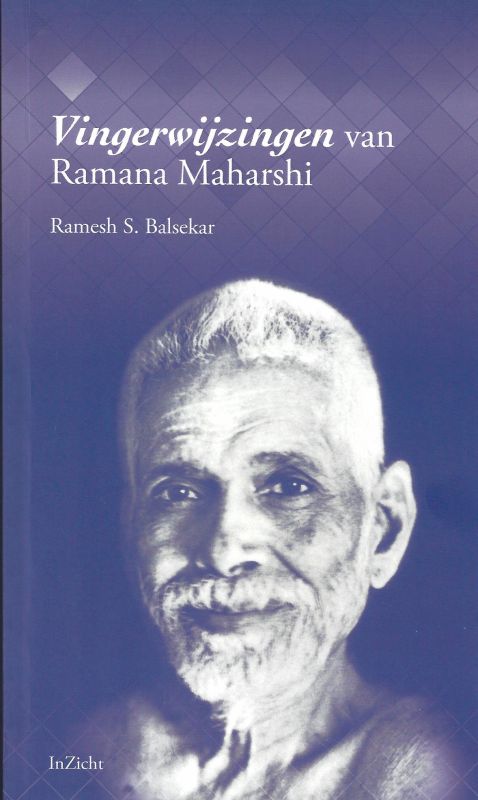
Door Ramesh S. Balsekar (1917 – 2009), vertaling door Mieke Berger.
96 Pagina’s | 2008 | Paperback | Uitgeverij Inzicht, Hillegom | ISBN: 9789077908006.
Oospronkelijke titel: Pointers from Ramana Maharshi.
Ramana Maharshi, de wijze van Arunachala gaf er de voorkeur aan om in stilte te onderrichten. Als hij woorden gebruikte, dan deed hij dat spaarzaam en met een groot dramatisch effect, Wat de meeste indruk maakte, was de autoriteit waarmee hij zijn diepe kennis naar buiten bracht.
Hoeveel alles wat Sri Ramana Maharshi verkondigde vol betekenis was, moest men zijn uitspraken goed op zich laten inwerken en interpreteren om de kern van zijn leer goed te bevatten. Hardnekkig focussen op wat hij als onderricht gaf was een voorwaarde. Dit boek is anders, zelfs voor wie al veel boeken van Sri Ramana Maharshi heeft gelezen. De inhoud van dit boek legt de nadruk op het ultieme geluk, dat ieders ware natuur is.
Het is de meest compacte en toegankelijke tekst die beschikbaar is van Sri Ramana Maharshi, met aanvullindgen en annotaties van Sri Ramesh S. Balsekar, van wie bekend is dat hij advaita voor de westerse geest buitengewoon duidelijk heeft kunnen uitleggen.
Wie ben ik?
Door Sri Ramana Maharshi (1879–1950), vertaling door M.F.W. Berger Ph.D en J. Kramer Schippers.
23 Pagina’s | 2009 | Paperback | Uitgeverij Inzicht, Hillegom | ISBN: 9789077908020.
Oorspronkelijke titel: Who am I?
De weg naar Inzicht en Bevrijding is eenvoudig en behoeft weinig woorden. Alles wat er meer gezegd of geschreven wordt dan in deze tekst is verwoord, leidt af en kan aanleiding zijn tot verwarring en misverstand. De compacte, directe en heldere taal brengt ons direct naar de essentie van het bestaan. De tekst ‘Wie Ben Ik?‘ functioneert als een geheugensteun en is daarmee een belangrijke inspiratiebron, die de richting wijst naar Inzicht en Bevrijding.
Een Yoga van Licht

Door Geoffrey Hodson (1886 – 1983).
18 Pagina’s | 2021 | Paperback | Uitgeverij der Theosofische Vereninging in Nederland, Amsterdam | ISBN: 9789061751007. | Dharma Reeks 3
Oorspronkelijke titel: A Yoga of Light , Theosophical Publishing House, Adyar | ISBN: 9788170590149
Het eerste doel van meditatie is je eigen spirituele zelf te ontdekken. Het tweede doel is te beseffen dat jouw spirituele zelf voor altijd een integraal onderdeel is van het spirituele zelf van het universum.
Dit boekje is bedoeld als eerste leidraad voor degenen die op zoek zijn naar een beproefde en veilige methode.
Zij volgt het Theosofische mensbeeld, en kan daarmee met recht een eigentijdse ”Theosofische meditatie techniek” genoemd worden, terwijl zij tegelijkertijd geworteld is in de eeuwenoude yogatraditie.
Theosophy and Social Justice

By Dr. Barbara B. Hebert, William Quan Judge (1851 – 1896) & Annie Besant (1847 – 1933).
89 Pages | 2019 | Paperback | Martin Firrell Company Ltd, Modern Theosophy, London | ISBN: 9781912622177.
Dr. Barbara B. Hebert is the President of the Theosophical Society in America. William Quan Judge was one of the original founders of the Theosophical Society. In 1907, Annie Besant was elected the society’s second International President.
This volume explores the insight modern Theosophy can offer into social activism and the struggle for greater social justice. It is part of a series of writings, published under the banner of ‘Modern Theosophy’, re-presenting important texts drawn from the history of the theosophical movement complemented by texts from contemporary authors and innovative thinkers.
Sleutel tot de Upanishads

Door Manon van Dijk-Hullegie.
76 Pagina’s | 2020, eerste druk | Paperback | Uitgeverij Viveki, Lelystad | ISBN 9789078555155
Sleutel tot de Upanishads is een introductie tot de Upanishads, de belangrijkste spirituele teksten uit de Vedische cultuut. Ze geven ons antwoord op de grote levensvragen: wat is geluk en hoe bereik ik het? Wie of wat ben ik? Wat is de wereld en waaruit is zijn ontstaan?
De Upanishads onthullen de onbegrensde, onveranderlijke werkelijkheid ‘waaruit alle wezens zijn geboren, waarin zij leven en waarheen zij terugkeren’, Ze ontvouwen hoe het onbegrensde bewustzijn van zowel onszelf als de wereld is. In de ontdekking van dit feit zien we hoe we volledig acceptabel zijn, vrij van elk gebrek, de bron van geluk.
Aan de hand van een selectie prachtige mantra’s laat dit boekje zien hoe de duizenden jaren oude onderwijstraditie nog altijd de sleutel is tot deze kennis.
In een Oosterse rozentuin
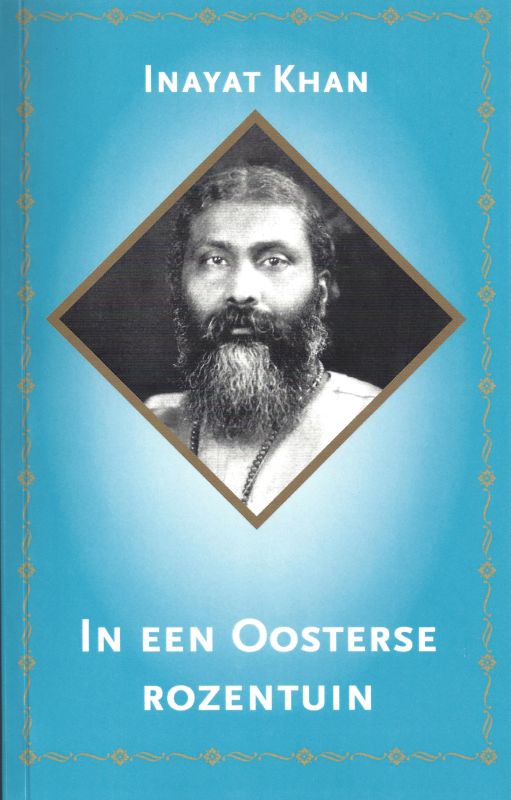
Door Hazrat Inayat Khan (1882 – 1927), vertaald door het Nederlands Publicatiecommitee van de Soefibeweging.
238 pagina’s | 2002 | Softcover | Uitgeverij Panta Rhei, Katwijk aan Zee | ISBN: 9076771359
Oospronkelijke titel: In an Eastern Rosegarden
In een Oosterse rozentuin bestaat uit 29 lezingen die Hazrat Inayat Khan, de brenger van de Soefi-boodschap, in het Engels gehouden heeft in 1918, 1919 en 1920. Deze nieuwe editie is een moderne en getrouwe vertaling van de eerste, geautoriseerde druk die nog tijdens het leven van de Soefi-mysticus in 1920 is uitgebracht.
In een Oosterse rozentuin werd altijd als een van de mooiste en belangrijkste delen uit de Soefi Boodschap van Inayat Khan beschouwd. De onderwerpen van de lezingen beperken zich niet tot één thema, maar bestrijken talrijke verschillende aspecten van het leven van de mens. Zowel zeer wereldse zaken als ‘Winst en verlies’, ‘De macht van de wil’, ‘Persoonlijk magnetisme’ en ‘Democratie’ worden belicht vanuit het standpunt van de Soefi-mysticus, evenals spirituele onderwerpen als ‘Geloof’, ‘Het mysterie van de adem’, ‘Geesten’, ‘De vrijheid van de ziel’ en ‘Het ideale leven’.
Kahlil Gibran – De Profeet
Door Kahlil Gibran (1883 – 1931)
127 Pagina’s | 2020 | Hardcover |Meulenhoff Boekerij bv, Amsterdam | ISBN: 9789029094351
Oospronkelijke titel: The Prophet
De profeet geldt als een van de bekendste spirituele boeken van de twintigste eeuw. In dit meesterwerk verbind filosoof en kunstenaar Kahlil Gibran twee werelden: die van de oosterse mythen uit zijn jeugd in Libanon en die van de westerse verlichting en tolerantie die hij omarmde als immigrant in Amerika. Voor veel lezers is De profeet een persoonlijke bijbel en biedt het boek inspiratie en houvast in een drukke, veranderende wereld.
Een mysterieuze profeet, Almustafa, gaat aan boord van een schip om naar zijn thuisland terug te keren na twaalf jaar in ballingschap te hebben geleefd. Voordat hij vertrekt, wordt hij tegengehouden door een groep mensen die hem vraagt zijn wijsheid met hen te delen. Dat doe hij in 28 poëtische essays, die diepzinnige en tijdloze inzichten bieden in verschillende aspecten van het leven zoals liefde, pijn, vriendschap, familie, schoonheid, religie, vreugde, verdriet en dood.
Kahlil Gibran wordt wereldwijd door iedere generatie lezers steeds opnieuw ontdekt. Zijn bekendste werk is De profeet (1923). Gibran schrijft op een inspirerende manier over geloof en godsdienst, vrijheid, liefde, schoonheid en de natuur.
Rupi Kaur (1992) is een Indiaas-Canadese dichter, schrijver en illustrator. Ze debuteerde in 2015 met de dichtbundel Melk en honing en haar tweede bundel De zon en haar bloemen verscheen in 2018 in Nederlandse vertaling. Haar boeken zijn internationale bestsellers en er werden wereldwijd meer dan drie miljoen exemplaren van verkocht.
‘Dit boek heeft mijn hart wijd opengebroken. En ik denk dat het dat bij jou ook zal doen.’ – Rupe Kaur
Het Geluk van TAO – Verhalen en Parabels uit China
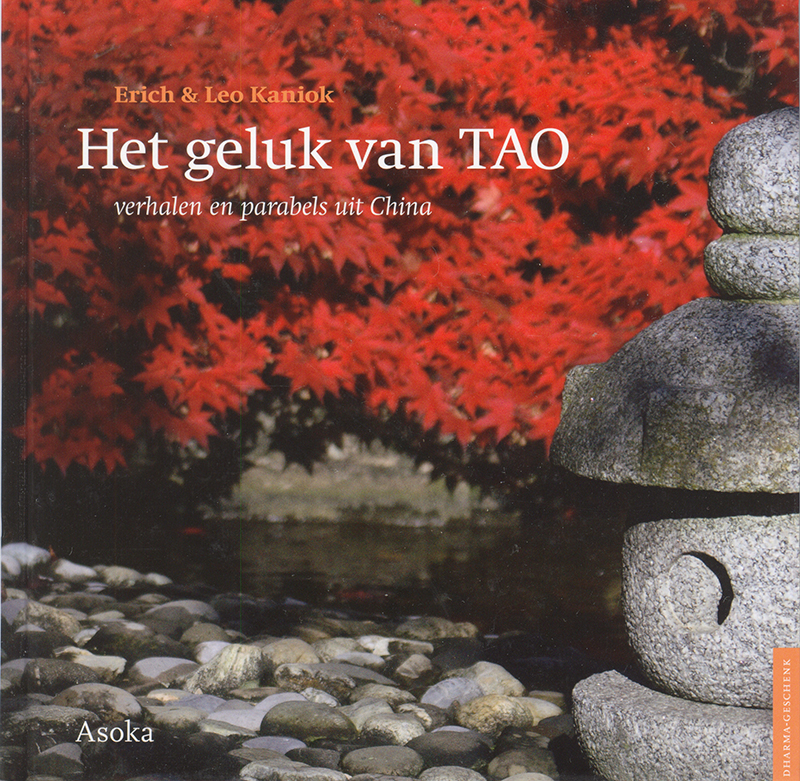
Door Erich en Leo Kaniok.
140 Pagina’s | Eerste & tweede druk 2008, derde druk 2010 | Hardcover | Asoka, een imprint van Milinda Uitgevers, Geraardsbergen | ISBN: 9789056701925.
‘In de wereld van de kennis voegt men elke dag iets toe. In de wereld van de TAO laat men iedere dag iets los’.
Deze uitspraak van Lao Tse is nu misschien wel actueler dan ooit. In onze huidige samenleving zijn we bezeten van vooruitgang. Wat het leven je ook heeft gebracht, het is nooit genoeg. We willen altijd iets anders of meer, dan dat we nu hebben. We denken dat onze bestemming voor ons ligt en we er hard voor moeten werken om die te bereiken. Niet steeds meer willen bereiken, maar de diepte van elke moment ervaren, daarin ligt de TAO verborgen.
De verhalen in dit boek helpen bij de herkenning dat er geluk ligt in elke handeling die je uitvoert, en niet alleen in het resultaat van die handeling. Dit is de kracht van TAO, de schoonheid van een weg, die tevens het doel is.
Afkomstig van p. 80 – ‘Zijn zonder Titel’:
” Op een dag kwam de gouverneur van Lu voor het eerst op bezoek bij Lao Tse. Een van zijn leerlingen liet Lao Tse het visitekaartje van de gouverneur zien waarop stond: ‘Kitagaki, Gouverneur van Lu’. ‘Met zo’n man wil ik niets te maken hebben’, zel Lao Tse tegen zijn leerling. ‘Zeg maar tegen hem dat hij rechtsomkeert maakt’. De leerling bracht het kaartje terug en verontschuldigde zich. ‘O nee, het was mijn fout’, zei de gouverneur en met een potlood kraste hij de woorden ‘Gouverneur van Lu’ door. ‘Breng het alstublieft nog een keer naar uw leraar’. Toen Lao Tse het kaartje zag, riep hij uit: ‘O, is dat Kitagaki? Breng hem binnen, ik wil hem graag ontmoeten. “
Lente in je Hart – Verhalen en Parabels uit Oost & West

Door Erich Kaniok.
140 Pagina’s | Eerste en tweede druk 2012 | Hardcover | Asoka BV., Rotterdam | ISBN: 9789056702489.
Lente is ontdooien. – Wat bevroren en star is wordt zacht en begint te stromen. Lang gekoesterde overtuigingen smelten, vastgehouden, gestolde emoties lossen op. De lentezon in je hart kan je leven veranderen, kan krachten laten ontluiken, die tot nu toe misschien verborgen waren. Het stille licht van wijsheid en diepe intuitie stralen in je hart: het is de lentezon die je vanbinnen verwarmt.
Er is in de mens een verlangen naar warmte, naar licht. Het is hetzelfde dat in de lente de blaadjes en de bloemknoppen doet groeien. En alles in de natuur werkt samen om dit verlangen naar licht en zon te wekken en het ontkiemen en bloeien te stimuleren. De verhalen in dit boek proberen voor jou hetzelfde te doen. Ze willen je verlangen naar licht wekken en vastgehouden overtuigingen en denkpatronen opzij schuiven – het oude wolkendek openbreken voor de innerlijke lentezon in je hart.
Afkomstig van p. 11:
Geen Keuze
” Er was een leerling, die na vele jaren van studie, rituelen en tempelbezoeken aan de meester vroeg: ‘Meester, ik volg nu al jaren alle lessen die u geeft, doe alle oefeningen en houd me aan al uw gestelde leefregels. Er is misschien wel wat veranderd in mij, maar verlichting heb ik er niet door bereikt. Zijn al die zaken, die u ons voorschrijft wel nodig voor het bereiken van verlichting?’ De meester antwoordde: ‘De meesten onder ons vinden er houvast an en dat is goed, maar als je het zo stelt, echt nodig voor verlichting nee dat zijn ze niet. ‘Maar wat is het dan meester, zeg het mij alstublieft’, vroeg de leerling. ‘Een dag niet oordelen zou voldoende moeten zijn om volledig eenheid te worden opgenomen’, antwoordde de meester. “
Bhagavad-Gita – The Song of God
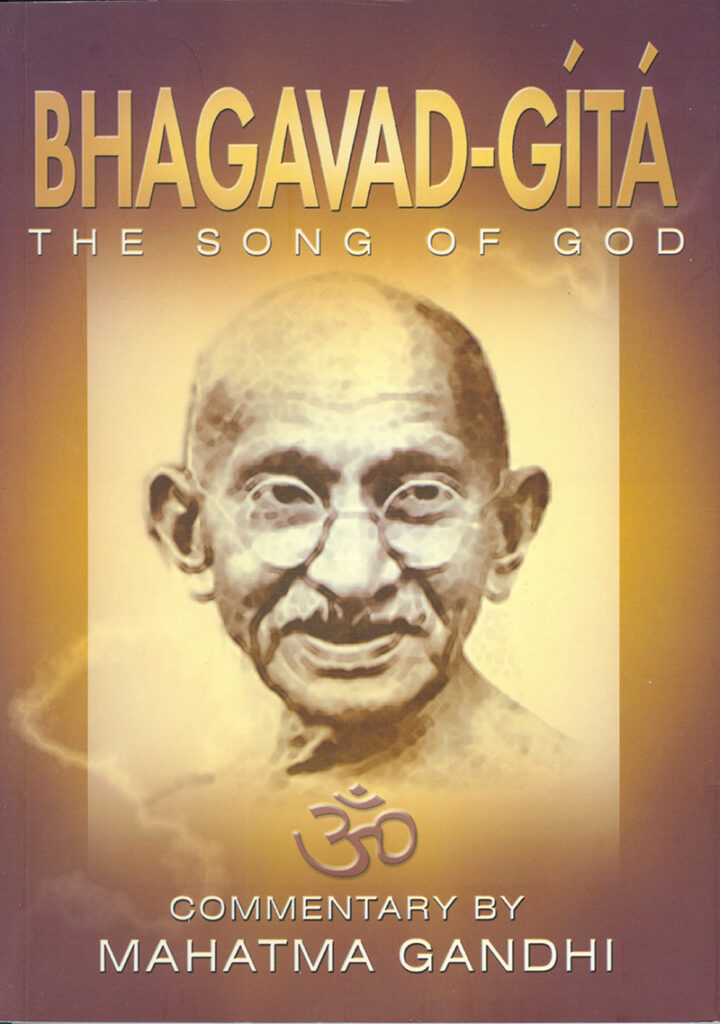
Commentary by Mohandas K. Gandhi.
127 Pages | First edition 2002, reprinted 2003 | Softcover | Axiom Publishing, Australia | ISBN: 1864761709.
‘When doubts haunt me, when disappointments stare me in the face, and I see not one ray of hope on the horizon, I turn to Bhagavad-Gita and find a verse to comfort me: and I immediately begin to smile in the midst of overwhelming sorrow. Those who meditate on the Gita will derive fresh joy and new meaning from it every day’. – Mohandas K. Gandhi.
Mohandas Gandhi was a Hindu from birth and consequently always had a copy of the Bhagavad Gita close by. However, it was not until he was a law student living in England that he gained a firm grasp on its real meaning. It was this deeper meaning, which would guide him in all he was to do.
From Discourse 15 – ‘ Purushottama Yoga’ (p. 109):
” 12. The light in the sun which illumines the whole universe and which is in the moon and in fire – that light, know thou, is Mine;
13. It is I, who penetrating the earth uphold all beings with My strengh, and becoming the moon – the essence of all sap – nourish all the herbs;
14. It is i who becoming the Vaishvanara Fire and entering the bodies of all that breathe, assimilate the four kinds of food with the help of the outward and the inward breaths.
15. And am I seated in the hearts of all, from Me proceed memory, knowledge and the dispelling of doubts; it is I who am to be known in all the Vedas, I, the author of Vedanta and the knower of the Vedas. “
The Spiritualscape of the Upaniṣad-s
By R. Balasubramanian, general editor S. Sankaranarayanan.
27 Pages | First edition 2007 – The Adyar Library Pamphlet Series No. 63 | Pamphlet | The Adyar Library and Research Center, India | No ISBN.
The Upaniṣad-s are extraordinary texts and not only the concluding portion, but also the consummation of the Veda-s. There are four Veda-s, and each Veda has four sections, which are called Mantra, Brāhmaṇa, Āraṇyaka, and Upaniṣad. The Mantra-s are hymns in praise of Gods and Goddesses. The Brāhmaṇa-s deal with sacrificial rites. The Āraṇyaka-s contain meditative practices. The Upaniṣad-s are philosophical treatises dealing with Being and beings of all kinds.
The aim of the Upaniṣad-s, according to Śamkara, is to help human beings dis-cover the Self, which is Brahman and overcome the existential predicament. The goal can be achieved only by means of a new thinking, a radical questioning of the given, a rigorous inquiry into the life-world, which is bound to lead to a transvaluation of all values through deconstruction and reconstruction.
From page 14:
” The enlightened one attains unity with the All. He expresses wonder that the individual with all limitations has been able to shake them off and become one with the All. To get at the Real, we must get behind the forms of matter, the forms of life, the forms of mind, the forms of intellect. By removing the sheaths, by shaking off the bodies, we realise the Highest. This is the meaning of vastrāpaharaṇa. ‘Across my threshold naked all must pass’. “
The Role of Māyā in Man’s Evolution
19 Pages | Softcover | The Blavatsky Lecture, 1986 | The Theosophical Society in England, London | No ISBN.
The Blavatsky Lecture delivered at the Annual Convention of the Theosophical Society in England at the College of Ripon and York, St. John, Ripon, July 29th, 1986.
A vital feature of the esoteric traditions contains the notion that all manifestation is to be regarded as illusion. Illusion is the usual translation of the Sanskrit word māyā. Yet, although she uses this definition of the Sanskrit Helena Petrovna Blavatsky (1831 – 1891) presents important qualifications to the word to help the student fathom the subject matter in her major work. She writes: ‘Māyā or Illusion, is an element which enters into all finite things, for everything that exists has only a relative, not an absolute, reality, since the appearance which the hidden noumenon assumes for any observer depends upon his power of cognition…’
From page 4:
” Nothing is permanent except the one hidden absolute Existence which contains in itself the noumena of all realities. The existences belonging to every plane of being, up to the highest Dhyan Chohans, are, comparatively, like the shadows cast by a magic lantern on a colourless screen. Nevertheless, all things are relatively real, for the cognizer is also a reflection, and the things cognised are therefore as real to him as himself. Whatever reality things possess, must be looked for in them before or after they have passed like a flash through the material world; for we cannot cognize any such existence directly, so long as we have sense instruments, which bring only material existences into the field of our consciousness. “
Man And The Universe – A Quest
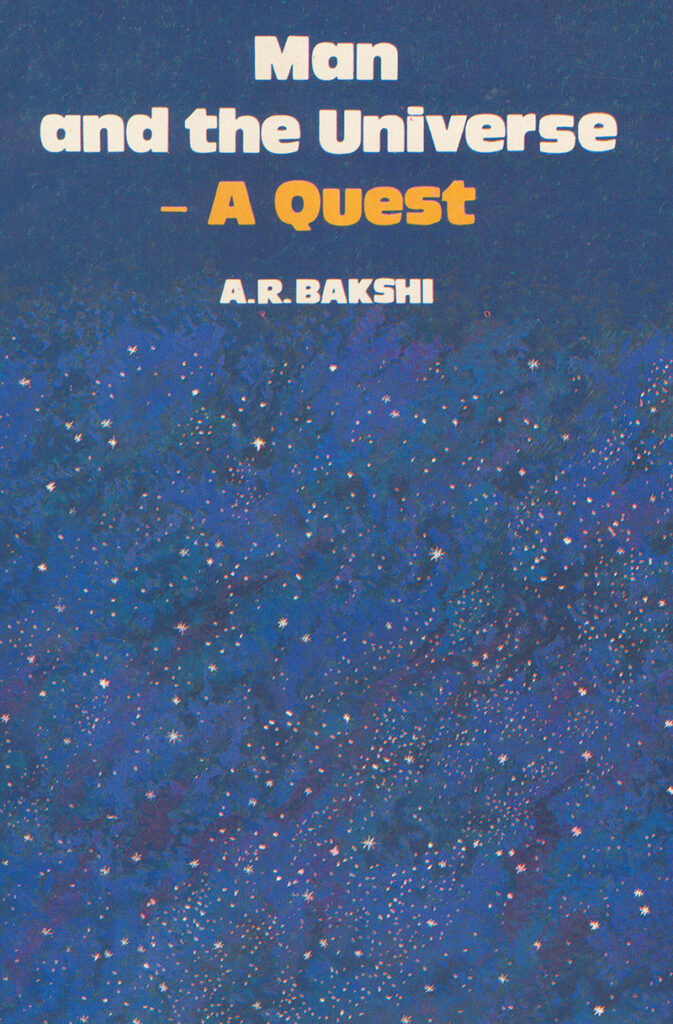
By A.R. Bakshi, Foreword by Radha S. Burnier (1923 – 2013).
136 Pages | First edition 1994 | Softcover | The Theosophical Publishing House, Adyar | ISBN: 8170592313.
The ‘Universe’ and ‘Man’, have both been the subject of study by great thinkers through the ages. Man and the Universe – A Quest presents some of the main principles of occult teaching to the ordinary reader and also supplies the serious student with sufficient material for original study offering profuse references to The Secret Doctrine (1888).
From Chapter VII – ‘Laws of Nature & Universal Truth and Order’ (p. 92 & 93):
” The whole life of the universe, according to the Ancients, is a part of a great artistic process cast into rhythmic phenomenal occurrences such as death and rebirth, creation and destruction, time and eternity, space and void, each occurrence symbolises an eternal cosmic movement. This concept of beauty and art in cosmic motion is symbolised as a female aspect of creative energy called in Indian mysticism ‘Durgā’ (the invincible), whose laws are impregnable. “
Theosophy – What’s It All About?
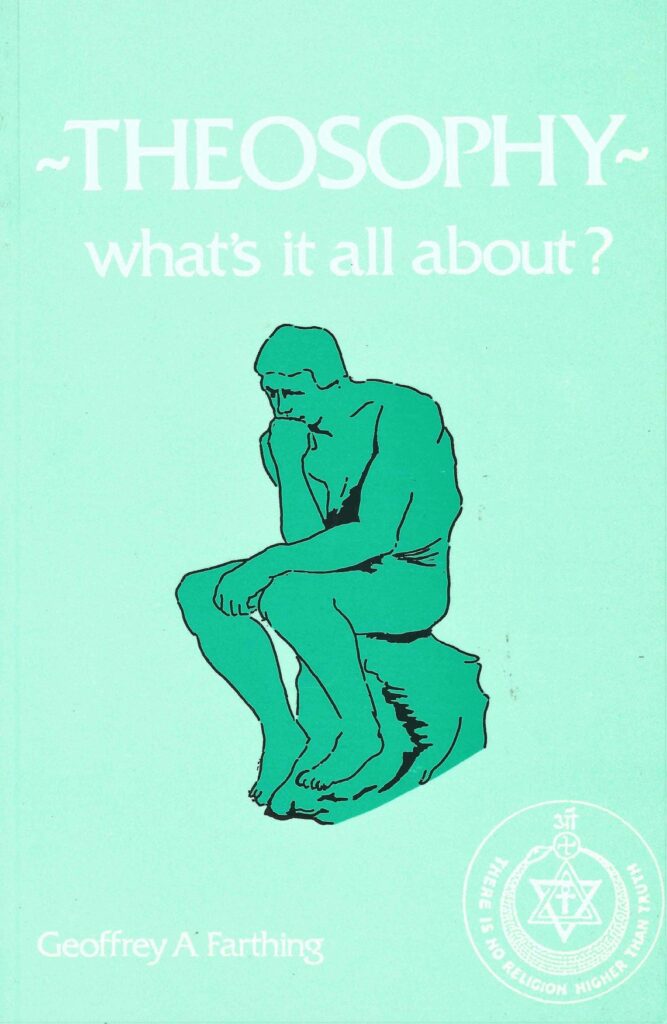
By Geoffrey A. Farthing (1909 – 2004).
84 Pages | Softcover | Theosophical Publishing House, London | ISBN: 0722952597.
What indeed is Theosophy about? It is about the universe, its nature and origins and the processes that operate in it. It is about man and his nature and origins and his relationship to the Whole of which he is a part. It is about law that operates throughout Nature; it is about evolution and individual responsibility, about Life and living and the purpose of it all, and it is about the ways of knowing that may set men free. The field of Theosophy is vast, and its literature is extensive. This book is an introduction to an absorbing and life-long study.
From Chapter – ‘The Purpose of Life (p. 20)’:
” The purpose of life is then to live. Living involves change and this change, as we shall see later, is cyclical but always on an expanding progressive scale, growth. Spirit or life on the one hand is descending into manifestation in the physical world, and on the other it is ascending by gradually improving forms through ever-unfolding consciousness, until the sage when Man endowed with mind achieves true self-consciousness. The activities of Spirit in physical forms give rise to the production and multiplication of individualized self-conscious units of Itself, human and ultimately super-human beings, each eventually returning to its source with its harvest of unique experience, attributes and power. Life, in short, is a journey to perfection. “
Illuminations of the Bhagavad-Gītā

By Kim and Chris Murray.
79 Pages | Copyright 1980/1998, Miniature Edition 2000 | Hardcover | Mandala Publishing Group, San Francisco U.S.A. | ISBN: 1886069328.
‘You cannot see Me with your present eyes.
Therefore I give you divine eyes, so that you
can behold My mystic opulence’.
- Bhagavad-Gītā 11-8.
This opulent presentation of the Bhagavad-Gītā, India’s great spiritual master-piece, is unique. Profusely illustrated with over forty color plates and more than fifty black and white drawings, this edition provides a fresh and stunning look at the immensely popular classic. The authors Kim and Chris Murray were inspired by the timeless knowledge and mysticism of the Bhagavad-Gītā and their personal association with A.C. Bhaktivedanta Swami Prabhupada, the translator of the book’s verses.
From page 15:
” For the Soul there is never birth nor death nor having once been, does he ever cease to be.
He is unborn, eternal, ever-existing, undying and primeval.
He is not slain when the body is slain. “
The Apocalypse and Initiation
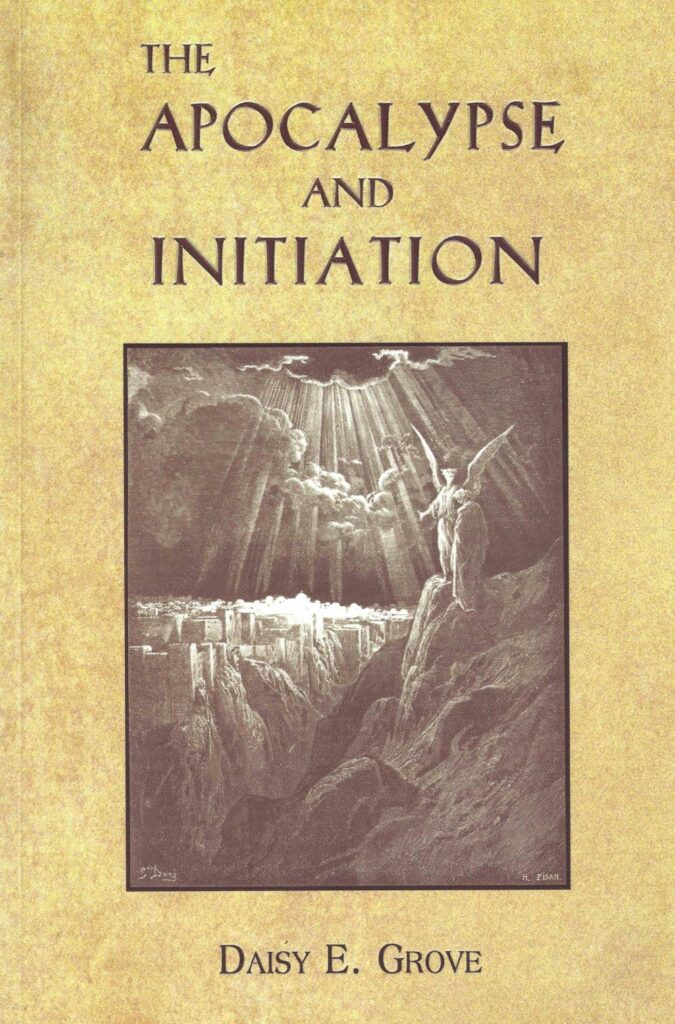
By Daisy E. Grove.
131 Pages | First Adyar Edition 2005 | Softcover | The Theosophical Publishing House, Adyar | ISBN: 8170594626.
The first part of the book explains the symbolism of the Apocalypse. An enigma to orthodoxy, this word has been interpreted in countless ways and speculated upon for the hidden meaning it is intended to convey. Significantly it found inclusion in the Christian Canon and has been preserved unaltered through centuries.
In the second part, the author explains that apocalypse is indeed ‘unveiling’ of what had been hidden, and goes on to present the Mystery-Drama of Initiation, in seven principal acts/episodes based on the authorized version of the Bible. The drama ends with the marriage, symbolizing the union of the Soul and the Spirit.
From Chapter 5 – ‘Animal Symbols’ (p. 47):
” The horn is a universal symbol of power, therefore the horns of this bogus lamb indicate the power that it exerts in its own realm. The horns of animals are their strength and defence, the leader of a flock being the horned male. Hence, the horns of the ram (Aries) associated with man’s intellectual principle symbolizes his ruling faculty or powers of leadership. In biblical language, to lift up the horn, exalt the horn, cut off the horn, always refers to powers strengthened, abused or weakened. The speech of the pseudo-lamb, compared to that of a dragon, is pretended knowledge, for the dragon, like the serpent, is a familiar emblem of Wisdom. “
Light on the Path – And an Essay on Karma (Adyar Mini)

By Mabel Collins (1851 – 1927).
86 Pages | Third Adyar Edition, 1st reprint 2013 | Hardcover | The Theosophical Publishing House, Adyar | ISBN: 9788170595823.
‘These rules are written for all disciples’. As we have it present, this book was dictated by Master Hilarion through the mediumship of Mabel Collins. Master Hilarion received it from his own teacher, the ‘Great One’, who among Theosophical students is sometimes called ‘The Venetian’; but even He is the author only of part of it. It has passed through three phases.
Light on the Path was the first of three treatises, which occupy a unique position in our Theosophical literature – directions from those who have trodden the Path to those, who desire to read it.
Gifts of the Lotus – A Book of Daily Meditations (Quest Miniature Series)
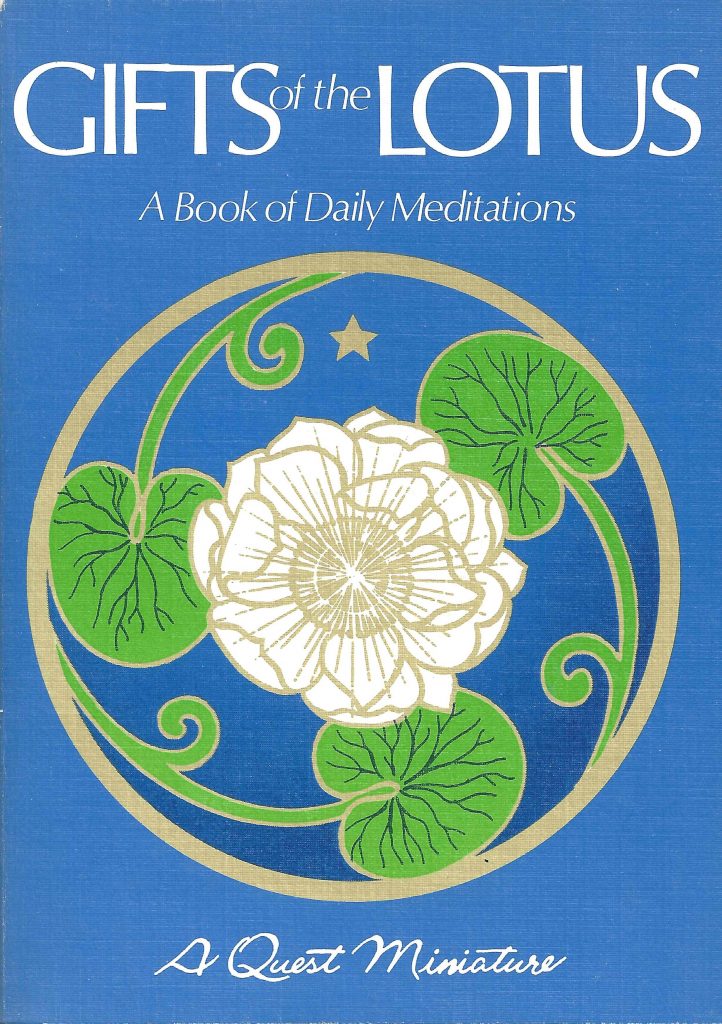
By Virginia Hanson.
191 Pages | 1974, fourth printing 1988 – A Quest Miniature | Softcover | Quest Books, U.S.A. | ISBN: 0835604500.
Here are 366 Meditations – one for each day of the year. Each from the heart of a spiritually oriented philosopher, from Plato to Emerson to Sri Aurobindo to a host of theosophical students and scholars. Inside of this miniature Quest book is a complete philosophy for living: quiet, short, engaging thoughts, each alive with the spirit of being. In truth, this is not a book to be studied. It is a book to be carried in the pocket or purse. It is a book to be treasured.
From page 41:
” 25. A doctrine of ‘Truth’, presenting itself without proof on the bare value of its own nobility, is as disturbing a factor to the majority of men as would be the stranger without name or country. We are afraid of it; it is to us an invasion from an unknown world. And such it is; it is an invasion from another world, from the only real world, the world of Reality . . . “
Creative Living
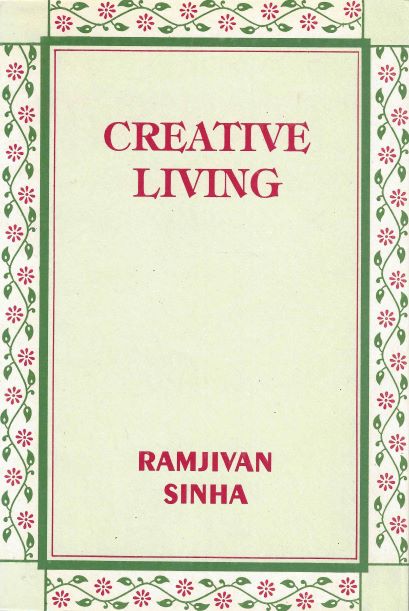
By Ramjivan Sinha.
39 Pages | First edition 1970, first reprint 1993 | Booklet | Theosophical Publishing House, Adyar | ISBN: 8170592267.
We learn from the study of Theosophy, the Ancient Wisdom, that while man is alive, his inner principles, namely Spirit, Intuition, Intellect, lower Manas and Kama, all are mixed together; that at our best moments we get some rays of Light or inspiration from the higher principles and we produce a beautiful work of art. And that there are moments when we fall back from such heights and are prone to karmic influences, which lead to contradictions in life. Very often, therefore, we find instances of self-indulgence, moral laxity or looseness, physical imbalance, loneliness or depression in the lives of artists. We are trying to discover ways of total creative living, in which there is no such contradiction, in which the life-stream flows freely and smoothly, in all its loveliness and beauty all the time . . .
From page 39:
” It has been said (above), that the constant openness of one’s being is an essential pre-requisite for discovery. To this may be added an attitude of constant helpfulness. As the plants and trees are pouring themselves out all the time for the joy of all around, so also the individual must learn to give, to serve and to sacrifice with joy. ‘What is the best that I can give or contribute? What way can I serve best’? Such questions the individual should, off and on, put to him or herself, in quiet moments and in solitude. The deep within will probably give the answer, and if one is open and alert, one will listen and discover one’s true vocation. “
Letters from a Sufi Teacher
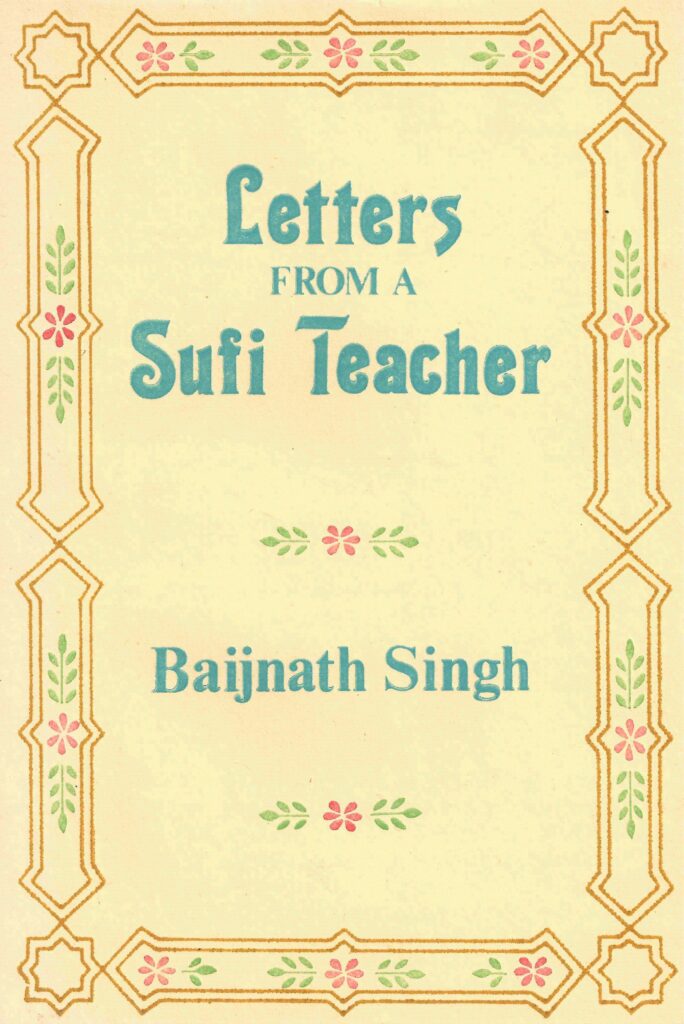
By Baijnath Singh.
97 Pages | First edition 1908, revised edition 1987 | Softcover | Theosophical Publishing House, Adyar | ISBN: 8170590450.
A teacher is in reality the inner being by the side of God, in the region of Truth, clothed in Divine Mercy and Glory . . . Perfect discipleship consists in perfect Love for the beauty of the teacher’s Godly strength. O brother and sister, know for certain that this work has been before thee and me, and that each man and woman has already reached a certain stage! No one has begun this Work for the first time . . .
From page 82:
THE HEART
” There is a treasure buried in the heart of the knower, It is LOVE. A single jewel out of it is worth a thousand heavens. The guardian of heaven is an Angel named Rizwân, whereas the guardian of the treasure of LOVE is God. Know that thy merit is assured by what thou seekest. If thou worshippest to obtain heaven or avoid hell, thou worshippest thy own desires. If thou seekest or fearest an object, thou are the worshipper of that object. Thy real value depends on what is in thy heart. If thou heart is attached to God, thou art a divine man or woman. “
In His Name
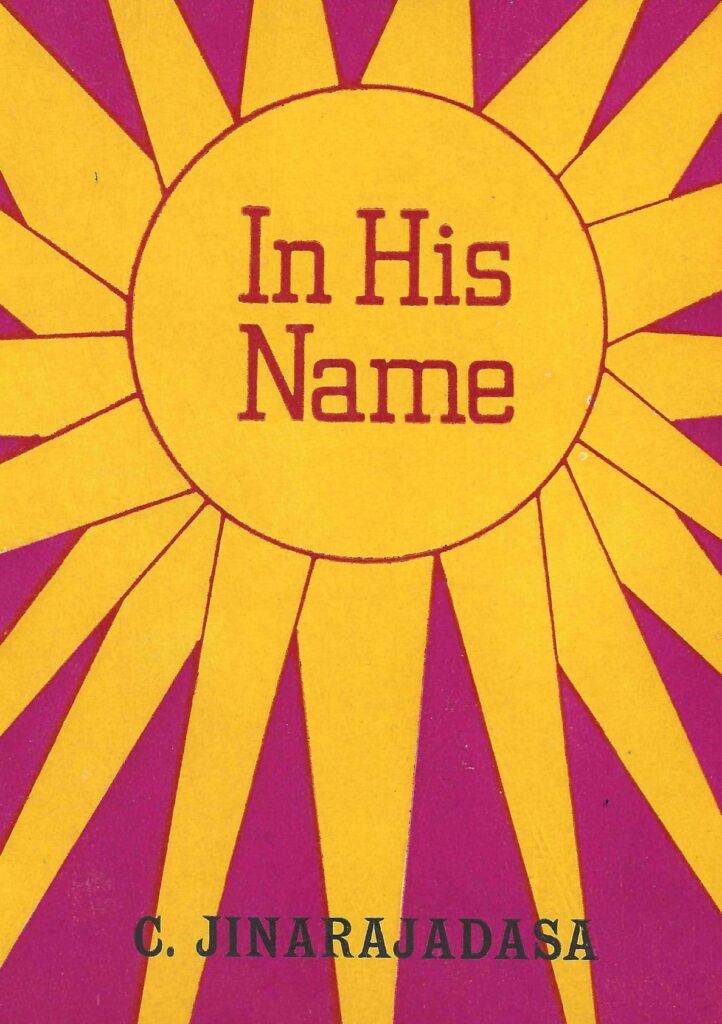
By Curuppumullage Jinarājadāsa (1875–1953).
64 Pages | Published in 1915 | Paperback | Theosophical Publishing House, Adyar | ISBN: 8170590159.
‘To the Master Koot Hoomi from his living son’.
From the Foreword:
” We met only for an hour, but I felt from the moment I saw you, that I had a message to give you. What that message is, you will find in the following pages. You have come to a point in your life when you feel you cannot any longer be fully of the world. You are established in an honourable career, and you know that time will bring you success and ease. But you already feel that you cannot work for success alone. You feel you must be an idealist in your profession, and be loyal to the ideal you see, even though it means suffering and humiliation. You are in the position that hundreds are in to-day, but you are different from them, in that you believe that the ideal which compels your obedience is not a thing of your imagination, but the first glimpse of a Personality whom you would like to call the Master. You feel that if this Master really exists and you could know hyim, then you could be utterly true to him in every way, regardless of what comes.
You know further that you cannot seek this Master by retiring into some monastic seclusion, in order that by meditation and contemplation there you might commune with him. You are not free to consider your welfare only, for there are those depending upon you for their needs. For their sakes you know you must engage in a worldly career. But while you are so engaged, you would like, if it be possible, at the same time to serve the Master is some way. It is because there is such a way, that I write these pages for you, and for others who are opening their eyes to those higher human possibilities which you have already seen.
Each human Soul has some message to givr to every other human Soul and what I wrtie is my message to you just now. It is not mine in reality, for it came to me from other human Souls, and I am giving to you as a brother what others as Brothers have given to me. “
C.J. – Taormina 1912.
Collected Poems
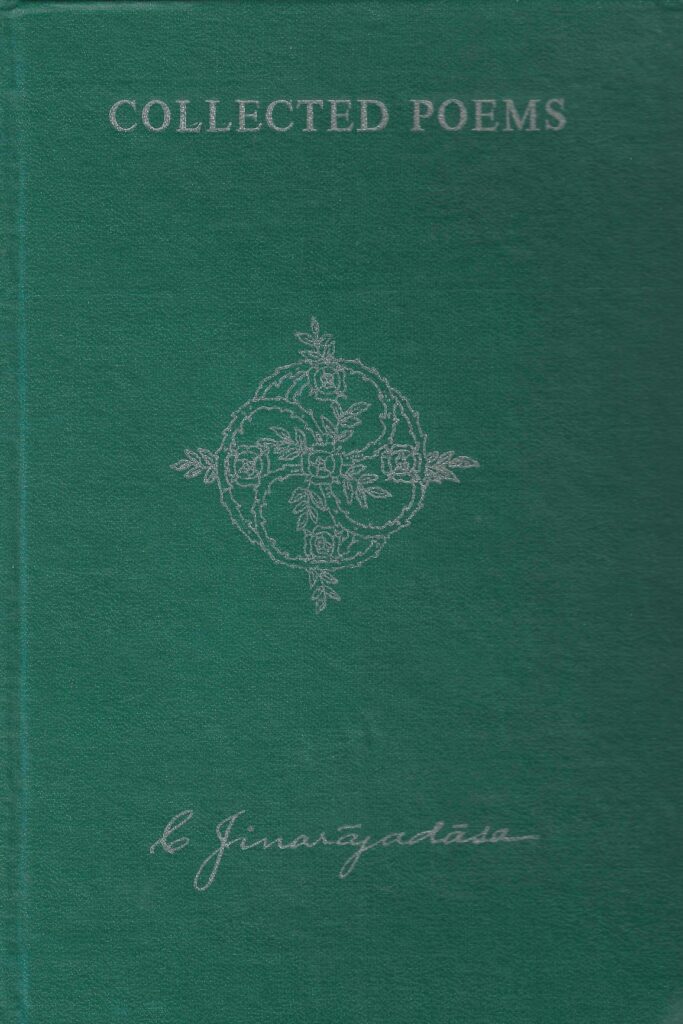
By Curuppumullage Jinarājadāsa (1875–1953).
122 Pages | Published in 1953 | Hardcover | Theosophical Publishing House, Adyar | No ISBN.
Selected and arranged by E.N.
This Volume of Poems by Jinarājadāsa is presented in fulfilment of a verbal promise made to him in 1949, further enjoined by a clause is his last Will, to the effect that after his death there should be published certain poems written in notebooks carefully preserved by him from 1909, when he first adopted the poetic method for giving expression to his feelings, thoughts and aspirations. Not many of these have previously appeared in print, although from time to time he has quoted a number to illustrate some point in a lecture or a book, and has on several occasions given readings from this poems to Theosophical audiences. I am indebted to the Manager of the Theosophical Publishing House, Adyar Madras, for permission to reproduce here a few poems which have already appeared in one or two of the author’s prose works.
From Page 3:
LACRIMAE RERUM
(To ‘Little Flower’)” This I see – that Nature is but a glass
Before which Form and Formless transient pass.
This I think – that a Hand unseen but kind,
To joys of Life my tranced eyes unbind.
This I feel – that life is a darkened room,
Where yearning I fulfil a weary doom.
This I know – that in inmost heart I cry
From life’s oppressive shadow-show to fly.
For this I AM: my flower-heart unfurled,
Turns to a Sun not of this shadow-world.
And so I cull the perfume of each thing,
And to you, dearest Shadow, tearful bring. “
France, 1913.
Theosofie: Een Weldadige Bron van Inspiratie (Blavatsky Lecture 2001)
Door Geoffrey A. Farthing (1909 – 2004), vertaald door Louis Geertman.
54 Pagina’s | Uitgegeven in 2001 door de Theosophical Society, London; deze Nederlandse editie is uitgegeven in 2008 | Brochure | Uitgeverij der Theosofische Vereniging in Nederland, Amsterdam | ISBN: 9789061750871.
Engels origineel: Theosophy, Its Beneficent Potentialities | Een Blavatsky-lezing gehouden in Winchester op 29 juli 2001 tijdens de Zomerschool van de Engelse afdeling van de Theosophical Society | Geen ISBN.
Theosofie is in haar totaliteit een allesomvattende kennis van de aard en van de wijzen waarop de Natuur werkzaam is, waarbij de mens een fundamentele rol speelt. Het mensenrijk vertegenwoordigt een kritische fase in het immense evolutionaire programma, wanneer de ‘mens’, de denker, geboren wordt. Kennis van de Theosofie wordt verkregen door generaties van getrainde zoekers en onderzoekers, ingewijden in de esoterische mysteriën. Zij maakt er aanspraak op een uitdrukking te zijn van waarheid, van de feiten van het bestaan. Daarom berust zij niet op gissingen of geloof.
Afkomstig uit de ‘Inleiding’ (blz. 7):
” Occultisten, kabbalisten, theosofen, jullie weten heel goed dat een Woord, zo oud als de Wereld, hoewel nieuw voor jullie, geklonken heeft bij het begin van deze cyclus, waarvan de potentie onopgemerkt door anderen, verborgen ligt in de som der cijfers van de jaren 1889; jullie weten heel goed, dat er zojuist een toon is aangeslagen die nooit eerder door de mensheid van dit tijdperk is gehoord; en dat er een Nieuw Denkbeeld wordt onthuld, gerijpt door de krachten van de evolutie. Dit denkbeeld verschilt van alles wat er in de negentiende eeuw is voortgebracht; het is echter identiek met de gedachte, die de overheersende toon en de grondtoon vormde van iedere eeuw, in het bijzonder van de afgelopen eeuw – absolute vrijheid van denken voor de mensheid. “
– Uit: Helena Petrovna Blavatsky (1831 – 1891), Collected Writings XI, blz. 133.
 More Details
 De Natuur zelf wordt gezien als een geheel van alles wat in haar aanwezig is, in een reeks van hiërarchieën van levende wezens, van de allerlaagste tot de allerhoogste, van de elementen waaruit de materie van onze objectieve wereld bestaat, omhoog langs de evolutionaire ladder, door de rijken van de Natuur tot aan de mens en verder, tot in de rijken van het bovenmenselijke. De Theosofie stelt dat er rangen van bovenmenselijke wezens bestaan die, als collectief met het totaal aan door hen verzamelde wijsheid en kennis, de ‘scheppers’ en ‘bestuurders’ van ons planetaire systeem omvatten.
Daily Meditations – Extracts from Letters of the Masters of the Wisdom
Compiled by Katherine A. Beechey
175 Pages |1949, Second edition, fourth reprint 2015 | Hardcover | Theosophical Publishing House, Adyar | ISBN 9788170591443
The Wisdom contained in the published letters of the Masters, is not merely for those to whom they were addressed but also for all those seeking to tread the Path of Holiness along the line of Devotion.
Glimpses of that Wisdom can be had through the extracts incorporated by the author into Daily Meditations. She has selected passages suitable to be meditated upon – one each for every day of the year. They are arranged as twelve virtues, with one quality assigned for each month, namely: Unselfishness, Compassion, Truth, Devotion, Purity, Sympathy, Courage, Intuition, Tolerance, Self-reliance, Equilibrium and Perseverance.
From page 43:
DEVOTION
” Relative to the population of the world
you may be few in numbers,
but spiritual strength and power depend
not upon numbers.
Rather do they depend upon burning sincerity. “
 Bezig met bijwerken…