Uitspraken van Paramahansa Yogananda

Door Paramahansa Yogananda
127 Pagina’s | 2016 | Softcover | Uitgeverij Self-Realization Fellowship | ISBN 9780876127278
Deze verzameling informele uitspraken geeft een intieme blik in de geest van een van de grote spirituele personen van onze tijd. Als Paramahansa Yogananda antwoord gaf op de vragen van degenen die zijn leiding zochten, deed hij dat met openhartigheid, spontaniteit en met diep inzicht. Hij wist feilloos wanneer hij een sombere situatie kon verlichten met een humoristische opmerking en was in staat de diepste filosofische waarheden om te vormen tot eenvoudige en onvergetelijke richtlijnen voor het dagelijkse leven.
Uitspraken van Paramahansa Yogananda laat de lezer delen in persoonlijke ontmoetingen met de Meester en biedt zo een schat aan spirituele inspiratie en praktische adviezen voor persoonlijke ontwikkeling. Zijn medeleven en begrip voor de mensheid en zijn grenzeloze liefde voor God geven glans aan elke bladzijde van dit boek.
Paramahansa Yogananda is … een man wiens inspiratie in alle uithoeken van de wereld met eerbied is ontvangen … Er is iets onbeschrifflijk moois in de spirituele leer uit het Oosten. Ze is in staat de ziel van het Westen te helen en te transformeren.
—Riders Rev
Waar gaan we eigenlijk naartoe? Bevrijdende wijsheid
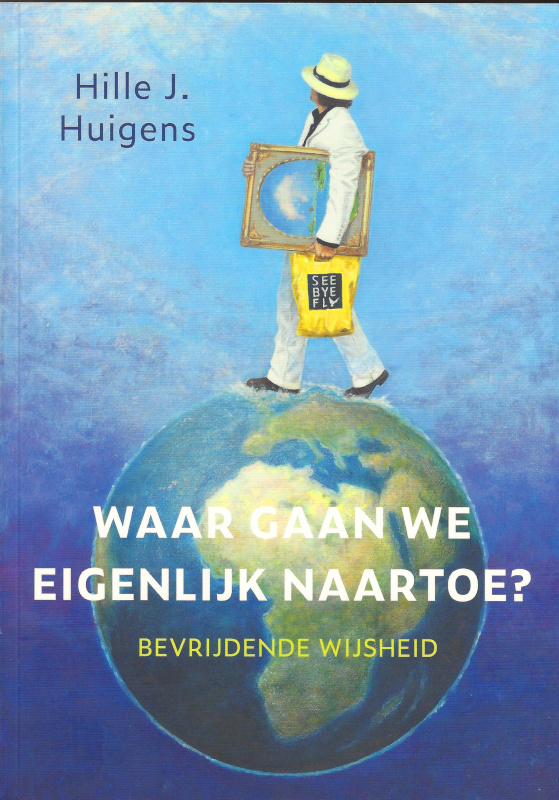
Door Hille J. Huigens
221 Pagina’s | 2020 | Softcover | Uitgeverij Van Warven | ISBN 9789493175105
Bij onze geboorte zijn we keurig afgeleverd. Maar de leverancier is vergeten er een handleiding bij te doen. Misschien lijkt alles vanzelfsprekend, intuïtief. Maar dat is het niet. De realiteit is, dat we het elkaar en onszelf vaak knap lastig maken. Omdat we niet weten hoe met onszelf om te gaan. We kennen onszelf niet.
Dit boek biedt je de ontbrekende handleiding. De korte versie. Met kennis, praktische oefeningen, meditaties en reflecties. De handleiding is gebaseerd op oude tradities en moderne neurowetenschap. En leert ons dat de mens bedoeld is om zich spiritueel te ontwikkelen. Op weg te gaan, met een doel.
Hille Huigens weet het eenvoudig uit te leggen, met tal van praktische voorbeelden uit het dagelijks leven. Hoe het werkt: lichaam, geest, bewustzijn, aandacht, taal, ruimte en tijd, de krachten die op ons inwerken, wat we ontvangen en wat we uitzenden.
Als we dat beginnen waar te nemen, kunnen we aan het werk gaan. Daarvoor kunnen we het beste ons gewone werk gebruiken. Onze dagelijkse handelingen. We transformeren onszelf door ons werk te doen als spirituele weg. Zo wordt gewoon werk tot Werk, met een hoofdletter. En we kiezen een weg, die past bij onze eigen aard.
Hille zelf volgt het pad van de ervaringswetenschap. Dat leidt tot het zien van structuur en samenhang. Dat is ook de essentie van dit boek. Structuur is bedoeld om samenhang, het verband der dingen te kunnen ervaren. Het resultaat is dat je gaat zien hoe het werkt, en dat kan zeer bevrijdend zijn.
De wereld van de ziel – Mundus Imaginalis
Door Daniël van Egmond
160 Pagina’s | 2014 | Hardcover | Uitgeverij Nachtwind | ISBN 9789082143423
Zoals de mens van het dier verschilt, zo verschilt de ziel van de mens. De ziel begrijpt de taal der symbolen. Zij vindt haar huis in de wereld van de mundus imaginalis. Zij is dynamisch, voortdurend in beweging én draagt de kwaliteiten goedheid, schoonheid en waarheid in zich.
In onze moderne wereld zijn veel mensen ervan overtuigd dat de ziel niet bestaat. Waar men toch over de ziel spreekt, wordt zij meestal vereenzelvigd met de psyche. Oude mythen en verhalen leren ons wat de ziel is: zij is dat aspect van ons bestaan dat min of meer onsterfelijk is. Zij behoort tot een ander niveau van werkelijkheid dan de fysieke wereld.
Daar waar de ziel verdwenen is, zijn we onze oriëntatie kwijtgeraakt en ontstaat er een niet te bevredigen verlangen en onrust. We zijn dan nog uitsluitend gericht op deze wereld van ruimte en tijd. Zolang we niet weten dat er een verticaal niveau van werkelijkheid bestaat waar de ziel haar domein heeft, zullen alle oplossingen voor deze onrust schijnoplossingen blijven.
Dr. Daniël van Egmond (Leiden 1947) studeerde cum laude af in wijsbegeerte en godsdienstwetenschappen, en promoveerde in 1993 op een proefschrift over het voortbestaan na de dood. Hij geeft al meer dan 15 jaar lezingen en meditatiecursussen voor de stichting Arcana te Utrecht. Eerder verscheen van hem Body, subject and self en De dood serieus nemen.
The Labours of Hercules – An Astrological Interpretation
By Alice Bailey (1880 – 1949).
229 Pages | 2018, eighth edition | Paperback | Lucis Publishing Company, New York | ISBN: 9780853301370.
The story of the dramatic experiences of the great and ancient Son of God, Hercules or Herakles, will give us a synthetic picture of the progress of the soul from ignorance to wisdom, from material desire to spiritual achievement…. Its theme will be found to be so inclusive that all of us, struggling in our present modern life, can make application to ourselves of the tests and trials, the failures and achievements of this heroic Figure, who strove, centuries ago, towards the same goal as we do.
A secondary object of this study is to present an aspect of astrology which will differ from that usually expressed. We shall trace the story of Hercules as he passed through the twelve signs of the zodiac. In each sign he expressed its characteristics, and in each signm he achieved some fresh knowledge of himself, and through that knowledge demonstrated the power of the sign and acquired the gifts which the sign conferred. In each of the signs we shall find him surmounting his natural tendencies, controlling and governing his destiny, and demonstrating the fact that the stars incline, but do not control.
The Soul and Its Mechanism

By Alice Bailey (1880 – 1949).
165 Pages | 2019, fourteenth edition, first printing in 1930 | Paperback | Lucis Publishing Company, New York | ISBN: 9780853301158.
It is an established and accepted occult fact that the soul works through the mechanism of the threefold personality in stimulating the three worlds of human evolution–the mental, the emotional and etheric/physical planes of consciousness.
It is said that the aspirant to discipleship really needs to know only two things: the constitution of man and the next steps ahead. In this book the way the human constitution actually functions in its component parts is made abundantly clear. It is an accepted goal for the aspirant that he learns to make of his personality equipment an instrument for the soul to use.
Serving a Higher Purpose – Theosophy for a Meaningful Life

By David P. Bruce.
229 Pages | 2019 | Paperback | Theosophical Publishing House, Wheaton | ISBN: 9780835609456.
When we sow our seeds in the garden of life, do we settle for a meager display of two or three flowers? Or do we aim for a pageantry of rich colors and breathtaking beauty?
So asks author David Bruce in these excuisite essays inspiring us to live an active spiritual life. Fresh and concise, he ranges in theme from lving with purpose, spiritual practice, and advice on books and reading. Free of dogma, he helps the open-minded inquirer find ultimate meaning.
For spiritual succor, Bruce turns to The Voice of the Silence and The Secret Doctrine, two masterpieces by nineteenth-century visionary Theosophist, H.P. Blavatsky. Readers will enjoy Bruce’s clarity on her wisdom about eternal, living truths. Our existence does have a purpose, he affirms, if we apply the principles we study to daily life. That way we benefit all of humanity as well as ourselves, for, as Theosophists believe, we are all one.
”Anyone who thinks Theosophy is not practical will find this book a revelation. It presents clear guidelines for spiritual living in the twenty-first century. ”
–From the foreword by Michael Gomes
The Holy Science
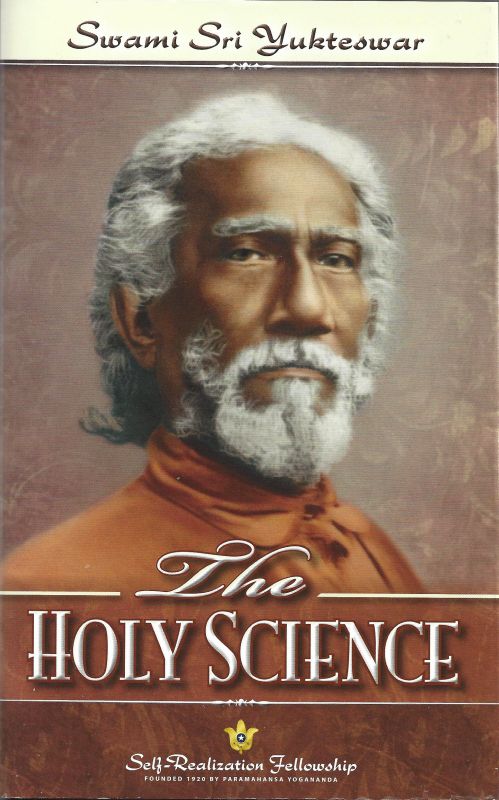
By Swami Sri Yukteswar (1855 – 1936)
122 Pages | 2020, eighth edition | Hardcover | Self-Realization Fellowship, Los Angeles | ISBN: 9780876120514
”Prophets of all lands and ages have succeeded in their God-quest,” writes Paramahansa Yogananda in the foreword to The Holy Science. ”Entering a state of true illumination, nirbikalpa samadhi, these saints have realized the Supreme Reality behind all names and forms. Their wisdom and spiritual counsel have become the scriptures of the world. These, although outwardly differing by reason of the variegated cloaks of words, are all expressions—some open and clear, others hidden or symbolic—of the same basic truths of Spirit.
”Swami Sri Yukteswar…was eminently fitted to discern the underlying unity…Placing the holy texts on the spotless table of his mind, he was able to dissect them with the scalpel of intuitive reasoning, and to separate interpolations and wrong interpretations of scholars from the truths as originally given by the prophets.”
The Holy Science demonstrates, by explanation of parallel passages from the Hindu and Christian scriptures, the essential unity of the great religious teachings of East and West. With incomparable wisdom and discernment, Sri Yukteswar explains the unversal evolution of consciousness, energy, and matter—the entire spectrum of experience that we call ”life.”
The author provides an authoritative foundation for a purely holistic view of man and the universe—and shows how that view supports the principles of natural living in body, mind, and soul. Rooted in the deepest truths of religion, it yet offers practical advice for fulfillment in everyday living, by delineating the physical, mental, moral and spiritual principles that govern the expansion of human consciousness.
Je Geest als Bondgenoot – Een weg naar innerlijke vrede en een open geest
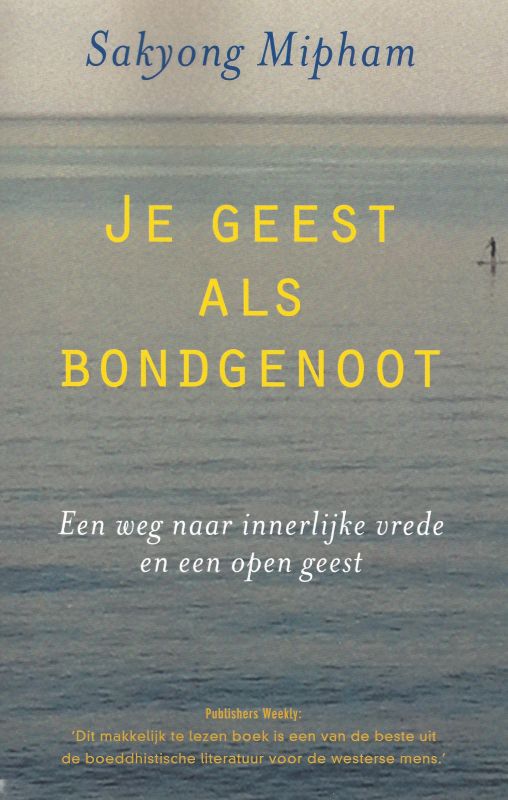
Door Sakyong Mipham, vertaling door Meino Zeillemaker.
173 Pagina’s | 2015 | Paperback | Uitgeverij Juwelenschip, Utrecht | ISBN: 9789076681245.
Sakyong Mipham is de zoon van Chögyam Trungpa Rinpoche. Net als zijn vader is hij een ervaren en geliefd meditatiemeester. In dit boek maakt hij onder andere duidelijk dat je bij meditatie de geest niet hoeft te onderdrukken of tot zwijgen te dwingen. Daarmee neemt hij een groot struikelblok weg voor velen die meditatie willen beoefenen. Je kunt je geest juist zien als bondgenoot om transformatie te bereiken!
Invisible Worlds – Annie Besant on Psychic and Spiritual Development
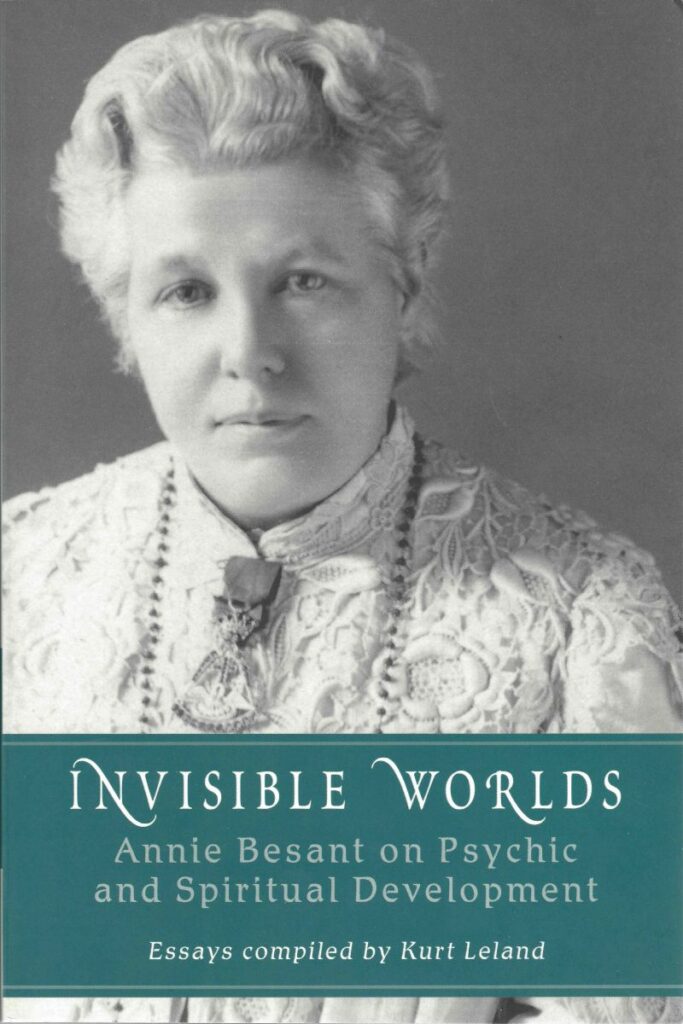
411 pages | 2013 | Softcover | Quest Books, Wheaton | ISBN: 9780835609104
Essays compiled by Kurt Leland
Annie Besant (1847 – 1933) was a British-born advocate of religious freedom and socialist economics; en activist for the rights of women, children, and workers; and a crusader for India’s political independence/\. An inspiring public speaker and still revered as a spiritual teacher, she was also the second president of the Theosophical Society. This book presents her lectures and writings in which she reveals not only the potential dabgers of psychic and spiritual development, but also how to prepare ourselves safely for true spiritual unfolding.
This finely arranged and annotated collection shines a brilliant beam onto both the ordered structure of Annie Besant’s thought and the richness of the realms with which she dealt. Highly recommended. –Robert Ellwood, PhD.
Kurt Leland, poet, composer, author, and consciousness researcher, maintains a spiritual counseling practice in the Boston area. His website KurtLeland.com includes The Annie Besant Shrine, a comprehensive bibliography of Besant’s writings.
Levende Sierlijkheid – Basisprincipes voor Persoonlijke Groei, Empowerment en Spiritualiteit
Door Dina-Perla.
165 Pagina’s | Uitgegeven in 2018 | Softcover | Uitgegeven door Dina-Perla Business, Amsterdam| ISBN: 9789463383349.
Om in de veranderlijke wereld een behoorlijk leven op te bouwen, staat spirituele ontwikkeling hoger op de prioriteitenlijst. Behoorlijk in de zin dat de mens actief leeft en weet wanneer zich aan de realiteit aan te passen en wanneer niet. Elk individu heeft immers een volmaakt beeld van de perfecte toestand, dat niet door wie of wat dan ook wordt opgelegd en als leidraad dient. Dit persoonlijke idee wordt de levensweg-formulering genoemd. De mens wil geluk en welzijn handhaven en natuurlijk liever vergroten. Als doelmatige gids ondersteunt Levende Sierlijkheid op het levenspad, zonder dat er enige overbelasting optreedt.
Afkomstig uit Hoofdstuk 2 (p. 55 & 56):
2.10 – De Structuur van de Mens:
” De schittering van het licht – universele instructie – is een opening in onszelf, waardoor het licht of het goede kan glinsteren. Voor het innerlijke ga je boven je gewone menselijke rede en geef je weerstand prijs. Het menselijke verstand niet willen afstaan aan het hogere bevattingsmechanisme, is als de steen des aanstoots. Eerst moet je ego sterk ontwikkeld worden. Als jouw receptakel – leegte en deficiëntie om het innerlijke – ontwikkeld is – wordt ontvangen pas mogelijk. Dit doe je door de innerlijke mens te leren kennen. Wanneer je niet uit je eigenliefde kunt komen en de toestand van wanhoop doorstaat, pas dan ga je essentiële zaken in je innerlijke ik opvangen. “
Theosofia – Van Innerlijke Wijsheid naar Uiterlijke Transformatie
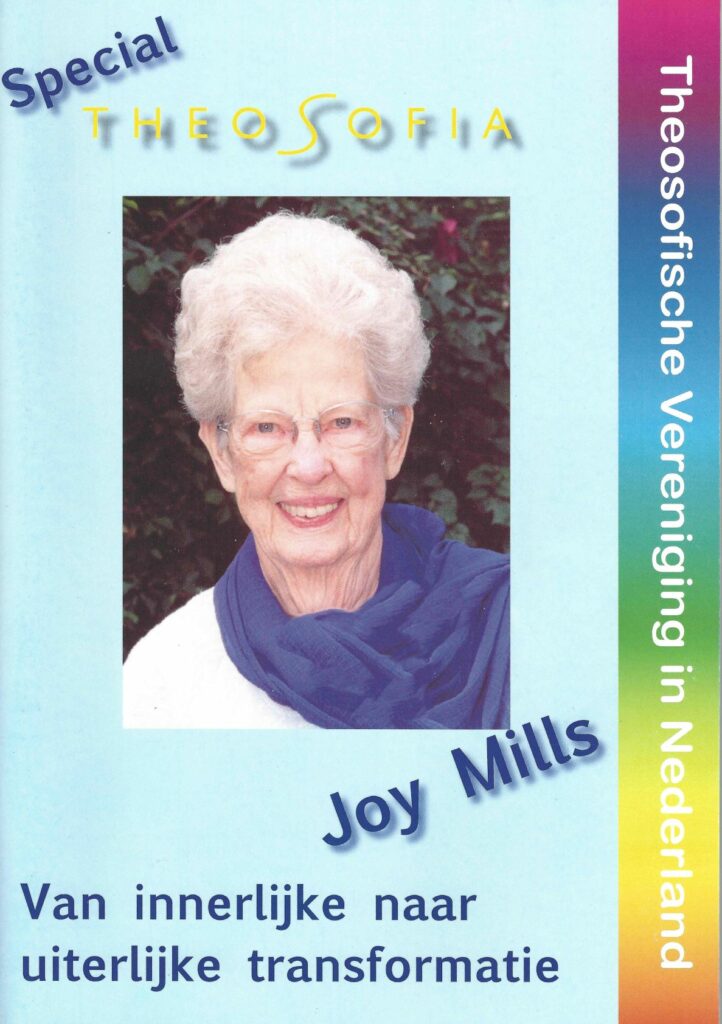
Joy Mills (1920 – 2015) Special Theosofia, hoofdredacteur Els Rijneker.
59 Bladzijden | Juni 2019 | Tijdschrift | Theosofische Vereniging in Nederland | Geen ISBN.
Deze maand, juni 2019, vindt u maar liefst twee Theosofia’s in uw brievenbus: het gebruikelijke nummer met gevarieerde artikelen, en deze special met de Nederlandse versie van een boek van Joy Mills: From Inner to Outer Transformation – Lectures on The Voice of the Silence (UTVN 1996 en 2002). U kent waarschijnlijk allemaal De Stem van de Stilte, het laatste boek van Helena Petrovna Blavatsky, die in 1875 samen met anderen in New York de Theosophical Society (TS) oprichtte. Deze Special bevat de Nederlandse vertaling van een lezingenreeks door Joy Mills over dit prachtige mystieke boekje op ons Internationaal Theosofisch Centrum (ITC) in Naarden, in de zomer van 1991. In april 1992 verschenen deze lezingen al eerder in Theosofia. Voor deze special zijn de teksten enigszins geredigeerd en zijn waar mogelijk de citaten uit De Stem van de Stilte overgenomen uit de meest recente Nederlandse vertaling in Drie Wegen, Eén Pad (UTVN 2006).
De aanleiding dat deze Special ‘Van Innerlijke Wijsheid naar Uiterlijke Transformatie’ juist nu verschijnt, mede op verzoek van de Esoterische School voor Theosofie, is het bijzondere Engelstalige seminar deze maand, juni 2019, met Martin Leiderman: ‘The Voice of the Silence, An Insight into the Mystery and Purpose of our Life’.
Afkomstig van bladzijde 34:
” Als u geen zon kunt zijn, wees dan de nederige planeet. Ja, als het u ontzegd is te stralen als de middagzon op de sneeuwbedekte berg van eeuwige zuiverheid, kies dan, neofiet, een bescheidener loop. Wijs anderen de ‘weg’ – hoe vaag ook, en ook al staat u alleen in de menigte – zoals de avondster doet aan diegenen die hun pad in duisternis bewandelen. ” – Uit: De Stem van de Stile, blz. 155 & 156.
Indra’s Net – Alchemy and Chaos Theory as Models for Transformation
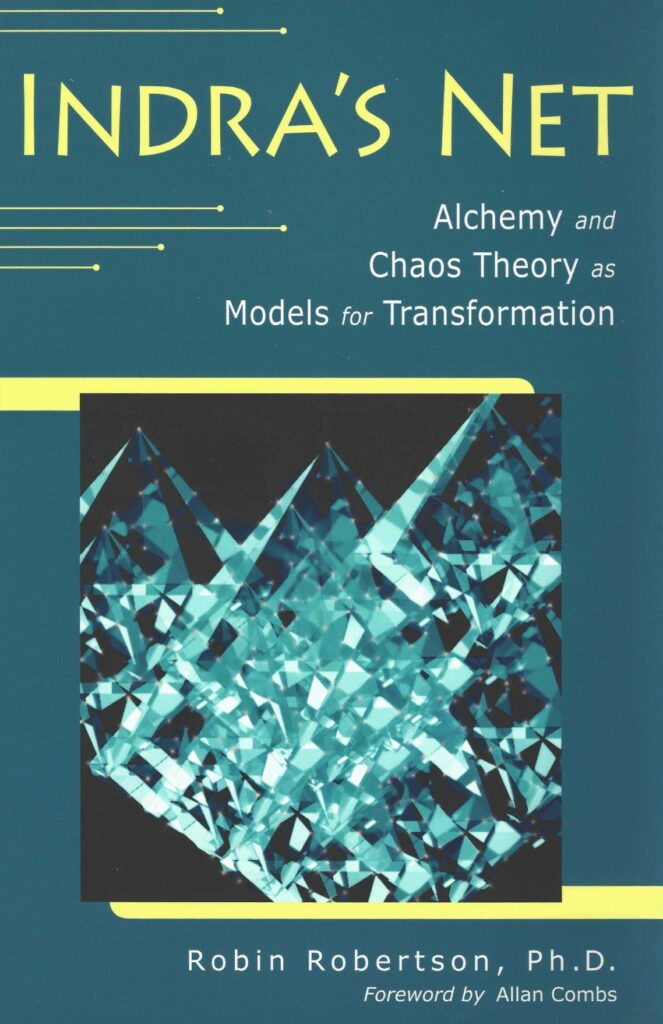
By Robert Robertson, Ph.D., Foreword by Allan Combs.
182 Pages | First Quest Edition 2009 | Softcover | Quest Books, U.S.A. | ISBN: 9780835608626.
‘ Somewhere in the celestial palace of the dancing god Indra, there hangs a fabulous net, that spreads out boundlessly over the cosmos in every direction. The divine craftsman has so cleverly fashioned this net that at every knot there hangs a dazzling jewel, each one so brilliantly polished, that it reflects all the others. As Above, so Below . . . ‘
This image of Indra’s net from a Buddhist Sutra symbolizes the Mystery, that, through our own transformation, each of us is united with everyone and everything else. Author Robin Robertson finds parallel models in ancient Alchemy, which tried to change base metal into gold, and modern chaos theory, which posits that tiny initial changes can have huge and unexpected outcomes – as a butterfly in Brazil might cause a tornado in Texas. Robinson lucidly shows how these two systems reveal the pattern of inner development in any spiritual tradition. No matter what one’s particular calling, these surprising insights can enrich and accelerate the transformative stages of any spiritual seeker.
From Chapter 6 – ‘The Philosopher’s Stone’:
” Central to this book is the understanding that the Opus is within us as much as it is without. As I mentioned in the Introduction, Buddhist philosophy captures this relationship between the world and the psyche through the image of Indra’s net: a vast necklace of shining jewels, all interconnected. It is told thus in the Avatamsaka Sutra:
Far away in the heavenly abode of the great God Indra, there is a wonderful net, which has been hung by some cunning artificer in such a manner that it stretches out infinitely in all directions. In accordance with the extravagant tastes of deities, the artificer has hung a single glittering jewel in each ‘eye’ of the net, and since the net itself is infinite in dimension, the jewels are infinite in number. There hang the Jewels, glittering like stars in the first magnitude, a wonderful sight to behold. If we now arbitrarily select one of these jewels for inspection and look closely at it, we will discover that in its polished surface there are reflected all the other jewels in the net, infinite in number. Not only that, but each of the jewels reflected in this one jewel is also reflecting all the other jewels, so that there is an infinite reflecting process ocurring. “
Inwijding – Priesteres in Egypte
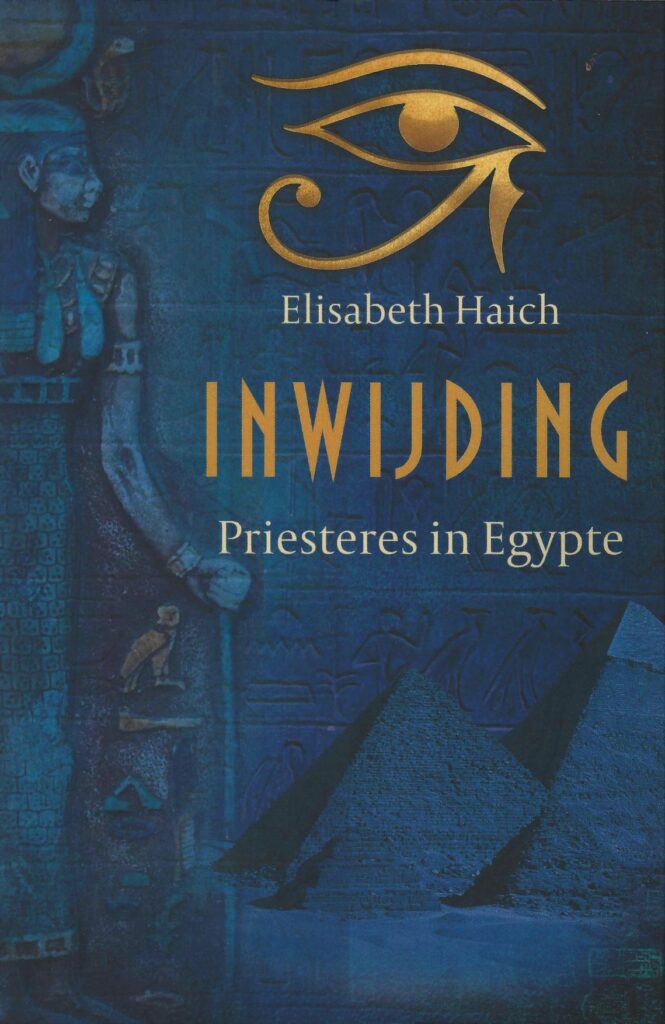
Door Elisabeth Haich (1897 – 1994), vertaling dra. C. Keus.
393 Pages | Oorspronkelijke uitgave 1960, Nederlandse vertaling 1978, vijftiende druk | Softcover | Uitgeverij Ankh-Hermes, onderdeel van VBK, Utrecht | ISBN: 9789020215908.
Oorspronkelijke titel: Einweihung | Uitgegeven in 1960, meest recente editie 2020 | Eduard Fankhauser Verlag, Thielle | ISBN: 9783968610092.
‘Het lezen van Inwijding is deel uitmaken van de inwijding zelf . . .’
Inwijding begint met de jeugd van Elisabeth Haich; een tijd, waarin ze zich eenzaam en onbegrepen voelt, maar ook in contact staat met een andere wereld. Dit contact zet zich voort als zij volwassen wordt, gaat studeren en uiteindelijk trouwt en kinderen krijgt. Haar leven lang is Elisabeth op zoek naar een verklaring voor het leven op aarde. Ze is overtuigd van een diepere zin achter de schijnbaar eindeloze keten van geboorte en dood, hoe onverklaarbaar dat ook mag lijken. Haar zoektocht leidt naar steeds wijzere mensen, die haar meer en meer onthullen over de zin van het leven. Ook krijgt ze steeds meer visioenen, die uitmonden in herinneringen aan een eerder leven als dochter van een Egyptische farao. Ze maakt kennis met de rijkdom van de Egyptische ‘Geheime Leer’ over wiskunde, astrologie en filosofie, kosmologie en piramidebouw. De weg, die Elisabeth in haar leven volgt is vol beproevingen en lessen, die haar karakter vormen. Op haar weg van zelfrealisatie gaat tenslotte haar diepste wens in vervulling met haar Inwijding tot priesteres.
Afkomstig uit de laatste blanco pagina’s:
” Het Zelf is het leven en de enige werkelijkheid, en wie in het Zelf is ingewijd,
wat eigenlijk wil zeggen dat hij zichzelf volledig heeft leren kennen,
heeft alles en allen gelijkelijk lief, want hij is een met hen. “
Het Mysterie van de Mens (5 Delen Lotusbundel 2)
Door 5 bekende auteurs binnen de Theosofie.
573 Pagina’s | De Lotusreeks II is gepubliceerd in 2013 | Softcover | Uitgeverij der Theosofische Vereniging Nederland | ISBN: 9789061750956.
De 5 boeken van de Lotusreeks II zijn nu samengebundeld te bestellen voor maar €12,50! Ieder boek is evenzo los verkrijgbaar in onze Webshop.
De Lotusreeks II bestaat uit 5 titels:
- Verborgen Krachten in de Natuur en in de Mens – Geoffrey Hodson.
- De Diepere Zin van het Leven – Śrī Ram.
- Speurtocht naar het Zelf – Eunice & Felix Layton.
- Theosofie en de Yoga-aphorismen van Patañjali – Geoffrey C.E. Williams.
- De Yoga-aphorismen van Patañjali – Manilal Nabhubhai Dvivedi.
1. Verborgen Krachten in de Natuur en in de Mens – Geoffrey Hodson.
Dit werk is het resultaat van 6 voordrachten, waarin Hodson het gehele overzicht van het universeel scheppingsproces heeft samengebracht. Lees over de ‘Logos’ ofwel Bijbelse ‘God’ als emanatie uit het Absolute, over de ontwikkeling van zonnestelsels uit hun goddelijke oorsprong en maak kennis met een diepere visie omtrent de plaats van de mens in de schepping.
2. De Diepere Zin van het Leven – Śrī Ram.
Śrī Ram geeft een serie toespraken over uiteenlopende kwesties: leven, dood en onsterfelijkheid, de werking van het denkvermogen, de mens als een bewustzijnsverschijnsel, slaap en dood als tweelingbroers, vernieuwing van binnenuit, ontwaken tot het besef van ‘waarheid’, het ware, het goede en het schone en de betekenis van het ‘Nu’.
3. Speurtocht naar het Zelf – Eunice & Felix Layton.
Vier toespraken zijn samengebracht in dit werk door de Laytons. De titels zijn: 1. Een goddelijk plan in een chaotische wereld, 2. Ken uw ware Zelf, 3. Reincarnatie en 4. Heerst er gerechtigheid in de wereld? De mensheid verkeert niet alleen precies in die omstandigheden, die zij zelf heeft geschapen. De mensheid verkeert tegelijk in optimale gelegenheid om die geestelijke vermogens te ontwikkelen, waaraan zij toe is. De werking van de grote ‘Wet’ van rechtvaardigheid is in zoverre een zege.
4. Theosofie en de Yoga-aphorismen van Patañjali – Geoffrey C.E. Williams.
Williams biedt aan de ene kant een inleiding tot de studie van de Theosofie. Aan de andere kant behandelt hij de yoga-aphorismen van de Indiaas wijsgeer Patañjali. De Yoga-Sūtra’s van Patañjali vormen de basistekst van de klassieke yoga, een van de zes filosofische scholen uit het hindoeïsme.
5. De Yoga-aphorismen van Patañjali – Manilal Nabhubhai Dvivedi.
Dvivedi, hoogleraar Sanskriet, geeft een vertaling en commentaar op het ethisch-filosofisch systeem van de Yoga-Sūtra’s van Patañjali. In de uitgebreide inleiding onderzoekt hij de plaats van yoga in de Indiase filosofie. Het werk bevat eveneens een register en index van Sanskriet termen.
On Knowing Oneself – A Theosophical Approach
By Danielle Audoin (1926 – 1917).
118 Pages | Adyar Editions – first edition, first reprint 2005 | Softcover | The Theosophical Publishing House, Adyar | ISBN: 8170592755.
Dutch translation: Een Benadering van Theosofie | Published in 1990 | Uitgeverij der Theosofische Vereniging in Nederland | ISBN: 9789061750628.
French original: Connais-toi Toi-même – A la lumière de la Théosophie (latest edition 2004) | The Theosophical Publishing House, Adyar.
Theosophical literature covers a vast field and throws light on age-old questions concerning the human being, the universe, and the Divine ground of existence. In this book, Madame Audoin presents the human being, who exists at different levels of consciousness, from a Theosophical point of view. Step by step she shows there is possiblity of unlimited unfoldment of consciousness, beginning with the first steps on the road to self-knowledge.
This is a clearly presented introduction to an important aspect of the Ageless Wisdom, highlighting its fundamental teachings about the human journey to Ultimate Reality.
From Chapter 3 – ‘The Physical Body’ (p. 35):
” We know that everything is vibration. Purifying and refining our physical body means making it capable of responding to finer and finer vibrations and at the same time incapable of reacting to the coarser vibrations, not only physical but also astral and mental. We can thus gradually transform our physical body. We know our cells are renewed every seven years and thus, if we change our diet, we can change the vibratory capacity of the physical body. “
The Path of Transformation – Voyage to the Silent Self

By Susan Bayliss.
35 Pages | Softcover | Blavatsky Lecture 2014 | The Theosophical Publishing House, London | No ISBN.
Life is full of potentiality from ’the circle of heaven’ to Mother Earth and all that live within her. The extent of this potential is hidden from us in our mundane world, concealed, according to the ‘Ancients’, behind a veil of illusion in which we live and experience our everyday lives. Out of nothingness came the ‘Great Illusion’ into a state of potentiality awaiting the impulse to become an expression of new life – a new universe. The same potentiality also lies within us and we too can awaken to a ‘new world’; a world in which we are transformed from a place of ignorance to a state of Knowledge and Wisdom. Our taks is to find the keys which open the the doorway to the higher life. Helena Petrovna Blavatsky (1831 – 1891) (HPB) in the Secret Doctrine (SD) describes the process of Life awakening at cosmic level, from potential space to the abstract space of ‘divine immaculate Mother-Nature’.
From page 29:
” In The Key to Philosophy, Helena Petrovna Blavatsky (1831 – 1891) tells us that the final goal cannot be reached in any way but through life experiences, and because most of this consists of pain and suffering, this is how we learn. Many of us will have seen the photograph of Einstein sittings at his desk with a copy of The Secret Doctrine lying there along with other books. He famously said that ‘The intellect has little to do on the road of discovery. There comes a leap in consciousness, call it intuition or what you will, and the solution comes to you and you don’t know how or why. All great discoveries are made in this way. “
Het Proces van Zelf-Transformatie – Onderzoek van Ons Hogere Potentieel om Effectief te Leven

300 Pagina’s | Eerste druk december 2017 | Softcover | Uitgeverij der Theosofische Vereniging Nederland, Amsterdam | ISBN: 9789061750994.
English Original: The Process of Self-Transformation – A Spiritual Guide for Effective Living | First edition, 2015 | Quest Books U.S.A. | ISBN: 9780835609357.
Een zelfhulpboek voor persoonlijke, spirituele groei en voor wereldburgerschap, nu in het Nederlands verkrijgbaar.
Hao Chin verstaat de kunst om een moeilijk onderwerp als zelf-transformatie in heldere bewoordingen te beschrijven, zelfs zodanig dat de lezer er direct praktisch mee aan de slag kan. De auteur heeft inmiddels gedurende talloze seminars veel mensen door het proces van zelf-transformatie geleid.
Emoties, die zich vaak lichamelijk uiten, en moeilijkheden die wij met ons denken opwerpen kunnen een effectief leven, persoonlijke groei en meditatie in de weg staan. Met de in dit boek beschreven aanpak om problemen via het lichaam bewust gewaar te zijn (self-awareness processing) en vervolgens los te laten, kunnen deze blijvend worden aangepakt.
Het boek bespreekt de gevolgen, die een dergelijke bewuste, assertieve en positieve levenshouding kan hebben voor familierelaties, voor opvoeding en onderwijs, en voor wereldburgerschap en vrede.
Vicente Hao Chin, Jr. was president van The Theosophical Society (Adyar) in de Filippijnen, is actief in de Theosophical Order of Service, en is de grondlegger van het Golden Link College in de Filippijnen, transformerend onderwijs voor minder bevoorrechte kinderen en jonge mensen. Hij schreef verschillende boeken, stelde de chronologische uitgave samen van de The Mahatma Letters to A.P. Sinnett, is een van de redacteuren van The Theosophical Encyclopedia en leidde zelf-transformatie seminars in meer dan twintig landen ter wereld.
Integrating and Managing the Personal Shadow – Intelligent Handling of Our Dark Energy
By I. Jauli and E. Reig.
116 Pages | Uitgegeven in 2016 | Softcover | Vijay Nicole Imprints Private Limited, Chennai | ISBN: 9788182094475.
For many of the ancient traditions and some psychological approaches the great obstructer of the inner development is fear. It generates insecurity; it pressures the searcher to decline his intentions and finally, in order to sleep peacefully, he assumes that retracting and not acting was smart, however he loses the opportunity to experience life.
” If we understand that fears are just thoughts, we can free ourselves from them. ” – Jiddu Krishnamurti (1895 – 1986)
These thoughts are part of the personal shadow. They destroy the possibilities of living and reduce our potential. This book explains the personal shadow and its effects on life. The bird’s meaning of life is flying, that’s why it has wings, the snake is to slither and therefore it has a body equipped for this movement. Likewise, human beings possess divine potential and therefore they need to develop that potential. Shadows affect the inner development.
This book discusses:
- Effect on inner development
- Effects of management of light and shadow in the human being such as wisdom, ignorance, darkness and shadow
- Explanation of shadow effects through fables
- Approach of shadow in psychology
- Methods to know our personal shadow and how to measure the effect of personal shadow in our lives?
- An alchemy model to face the shadow
- Transforming powers of change
This book also presents ideas and schemas, that combine science, philosophy and the ancient mystical traditions. It aims to help readers integrate their personal shadow and thus lead a fulfilling and productive life.
The Pathway to Perfection. A treatise on the Path of swift Unfoldment.
By Geoffrey Hodson (1886 – 1983).
35 Pages | First Edition 1954, 4th Reprint 2005 | Hardcover | Theosophical Publishing House, Adyar | ISBN: 8170590213.
In this book, which is a successor to his earlier work, Meditations on the Occult Life, Geoffrey Hodson communicates the essence of the teachings of Theosophy on the path of swift unfoldment. It gives us some understanding of the whole process of man’s evolution to a state of perfection. The reader glimpses the opportunities, difficulties, pitfalls and ups and downs of the entire journey from Man to Superman.
Mr Hodson wrote about forty theosophical books based on his occult investigations, and was awarded the Subba Row Medal in 1954 for his contributions to theosophical literature.
Man’s Supersensory and Spiritual Powers
By Geoffrey Hodson (1886 – 1983).
193 Pages | First Edition, 7th Reprint 2005 | Softcover | The Theosophical Publishing House, Adyar | ISBN: 8170593220.
Man undoubtedly possesses, in however rudimentary a form, certain supersensory powers. Their unfoldment can be hastened through Raja Yoga as the chief means. Included in this volume are talks by the author broadcast over the air in Australia. They are a guide to managing human life and developing the character needed for such unfoldment. However it is not the development of psychic powers that is man’s supreme goal, but ‘Self-realization’. Psychic powers are only by-products in the spiritual process of seeking ‘Realization’ and are not ends in themselves . . .
The Power of Thought – A 21st Century Adaptation of Annie Besant’s Classic Work ‘Thought Power’
By John Algeo.
172 Pages | First published in 1903, 2001 edition | Softcover | Quest Books, U.S.A. | ISBN: 9780835607971.
Theosophist Annie Besant (1847 – 1933) drew from the Ancient Wisdom of the East to explore the deep recesses of the mind. The original edition was published in 1903 and has been in print ever since. Now leading contemporary Theosophists John Algeo and Shirley J. Nicholson have painstakingly revised the text to free its timeless truths from the time-bound language of the early 20th century and make it more accessible to today’s readers. The result is a clear discussion of subjects of increasingly high interest: concentration, memory, consciousness, telepathy, sleep and dreams, cultivation of the will, and access to your ‘Higher Self’.
From Chapter 12 – ‘The Secret of Peace of Mind’ (p. 152):
” We are the Self, and therefore the joys and the sorrow of others are ours as much as theirs. To the extent that we realise this and learn to live so that we share the life that flows through us with the whole world – to that extent we learn the secret of peace. That secret is knowledge of the Self, and the thought ‘That Self Am I’ (even if we have not yet experienced the reality) helps us gain a peace of mind that nothing can disturb. As the Bhagavad Gita [2.70] says: He attains peace, into whom all desires flow as rivers flow into the ocean, which is filled with water, but remains unmoved – not he who desires desire. “
De Śiva-Sūtra – De Hoogste Werkelijkheid En Hoe Deze Te Realiseren
Door Iqbal Kishen Taimni (1898–1978).
272 Pagina’s | 1976, Eerste druk 2013 | Gebonden | Uitgeverij der Theosofische Vereniging in Nederland | ISBN: 9789061750949.
English Original: The Ultimate Reality and Realization – Śiva-Sūtra with Text in Sanskrit, Transliteration in Roman, Translation in English & Commentary | 2004 | The Theosophical Publishing House, Adyar | ISBN: 9788170594444.
De Śiva Sūtra behoort tot de school van het Kaśmir Śaivisme. De filosofie achter de Śiva-Sūtra is gebaseerd op het bestaan van een Allerhoogste Werkelijkheid die zich manifesteert als het gehele universum. Elke Monade vormt daarin een afzonderlijk centrum van bewustzijn en kracht en bezit in zichzelf in potentiele vorm in die Realiteit Universeel Bewustzijn en Kracht (Śiva en Śakti). De drie afdelingen in dit boek behandelen de ontvouwing van Bewustzijn, gezien vanuit Goddelijk Bewustzijn (Śiva), Goddelijke Kracht (Śakti) en de Monade (Aņu).
Afkomstig uit de inleiding:
” Steeds meer spiritueel ingestelde mensen over de gehele wereld keren zich af van de orthodoxe ideeën over religie en filosofie. Hun aandacht richt zich op de realisatie van een Allerhoogste Werkelijkheid, verborgen in het Hart van ieder mens, het uiteindelijk doel van iedere geestelijke inspanning en zelfdiscipline. Wat is de aard van deze Werkelijkheid, hoe kun je die realiseren, en wat is de aard van het werk dat die Grote Wezens verrichten, die hierin geslaagd zijn en die blijvend in die Werkelijkheid gevestigd zijn? Dit zijn enkele van de vragen, die van groot belang moeten zijn voor alle ernstige bestudeerders van de occulte wetenschap en die voor hen, die op weg zijn op het pad van praktisch occultisme. “
 More Details
 Elke Monade vormt daarin een afzonderlijk centrum van bewustzijn en kracht en bezit in zichzelf in potentiële vorm in die Realiteit Universeel Bewustzijn en Kracht (Śiva en Śakti). De drie afdelingen in dit boek behandelen de ontvouwing van Bewustzijn, gezien vanuit goddelijk Bewustzijn (Śiva), goddelijke Kracht (Śakti) en de Monade (Aṇu).
The Human Journey – Quest for Self-Transformation

By Joy Mills (1920 – 2015).
37 Pages | Adyar Pamphlet New Series #4, published in 2002 | Softcover | Theosophical Publishing House, Adyar | ISBN: 8170593549.
‘The pivotal doctrine of esoteric philosophy admits no privileges or special gifts in man, save those won by his own Ego through personal effort and merit throughout a long series of metempsychoses and reincarnations‘. – The Secret Doctrine, Vol. I, p. 17.
The search for human identity has been the subject of great literature, great art, music and philosophy throughout the ages. To approach any understanding of this human identity, and therefore to recognize the journey or the work on which we are engaged as human beings, we may begin by acknowledging the various facts which compose our individual identity. We have physical bodies, with their unique characteristics; we have feelings, thoughts, aspirations, and, in times of deep inner reflection or profound meditation, an awareness of something more, beyond yet near, neither wholly of ourselves nor wholly other, something indefinable yet real and true. H.P. Blavatsky, in setting forth the perennial philosophy, defined the human as a ‘saptaparna’, a seven-leaved plant. The seven ‘leaves’ or principles, as they are generally called, are variously given in theosophical literature.
From Page 13:
” To sail beyond the sunset, and the baths
Of all the western stars . . .
It may be that the gulfs will wash us down:
It may be we shall touch the Happy Isles,
. . . that which we are;
One equal temper of heroic hearts,
Made weak by time and fate, but strong in will
To strive, to seek, to find, and not to yield. “
More Details Joy Mills has been a member of The Theosophical Society since 1940. She has served as President of the Theosophical Society in America, General Secretary of the Australian Section, and International Vice-President. She has lectured in more than 50 countries, and worked as Director of the Krotona Institute of Theosophy, in Ojai, California.
The Self and Its Problems
By Charlotte W. Woods.
182 Pages | The Blavatsky Lecture for 1919 | Photo copy (1992) from the first edition published by The Theosophical Publishing House, London in 1922 | Kessinger Publishing Company, Montana U.S.A. | ISBN: 1564592642.
CONTENTS:
1. The Problem of the Self from Descartes to Kant.
2. The Problem of the Self in Current Philosophy.
3. The Problem of the Self in Theosophic Mysticism.
4. An Examination of the Forgoing Standpoints.
5. Conclusion.
From Chapter 4: ‘An Examination of the Forgoing Standpoints’:
” We have thus arrived at a definition of the self in our philosophy; it is the ground and condition of the manifold of experience, the unity, purpose, and wholeness, which give meaning to bare multiplicity and stability to that which is mobile and changing . . . “
The Process of Self-Transformation – Exploring Our Higher Potential for Effective Living

343 Pages | First Quest Edition 2015 | Softcover | Quest Books, U.S.A. | ISBN: 9780835609357.
Dutch translation: Het Proces van Zelf-Transformatie – Onderzoek van Ons Hogere Potentieel om Effectief te Leven | First edition 2017 | Uitgeverij der Theosofische Vereniging Nederland, Amsterdam | ISBN: 9789061750994.
This book is a modern restatement of this age-old Wisdom of humanity supplemented with specific tools that will help in accelerating the transformation of individuals. It was initially presented as a three-day workshop called the Self-Transformation Seminar. Because of the perceived effectiveness of its methods and approaches, it spawned a four-day youth camp for people from the ages thirteen to twenty-five called the Golden Link Youth Camp. Then, because of its impact on the young people who participated in the camps, the Golden Link School was established, which has since become an institution that offers tertiary courses and is now called Golden Link College.
From Appendix 3:
” Life is immensely complex. In understanding it more fully, we can’t limit ourselves to our respective areas of specialization, like a doctor who is good at curing diseases but fails miserably in dealing with marital or family problems. Genuine self-tranformation involves a well-balanced and well-rounded Wisdom regarding key-aspects of living. As facilitators, then, we need to widen our scope of comprehension such that we understand the dynamics of those key aspects – values, sorrows, pains, desires, fears, life’s purpose, relationships, the nature of consciousness, and so on. In deepening such understanding, our studies necessarily bring us to the fields of science, mysticism, psychology, religious experience, philosophy, physiology, social sciences and communication arts. “
De Kracht van het NU in de Praktijk

By Eckhart Tolle, vertaald door Peter Roelofsen.
117 Pages | Eerste editie 2001, 2de & 3de druk 2002, 4de &5de druk 2003, 6de & 7de druk 2004, 8ste druk 2005 | Hardcover | Uitgeverij Ankh-Hermes bv., Deventer | ISBN: 9020282697.
Engels origineel: Practicing the Power of NOW | Eerste editie 1999 | New World Library, California U.S.A. | ISBN: 9781577311959.
Met het daverende succes van zijn eerste boek De Kracht van het NU is Eckhart Tolle echt doorgebroken als een van de meest toonaangevende spirituele leraren van de laatste tijd. Zijn recept ‘leven in het nu’ blijkt bij zeer velen aan te slaan. Tolle slaagt erin ons op eenvoudige en transparante wijze duidelijk te maken hoe we ons kunnen bevrijden uit het keurslijf gevormd door onze gedachten, ervaringen en dogma’s, die te maken hebben met ons verleden, en volledig in het NU kunnen leven. Eigenlijk is het allemaal zo simpel, maar juist daarom blijkt het vaak zo moeilijk te zijn. We moeten alleen de ‘knop’ zien te vinden, waarmee we onszelf kunnen ‘omschakelen’. Eckhart Tolle reikt ons de benadering aan waar we die kwantumsprong in ons bewustzijn mee kunnen maken. In De Kracht van het NU in de Praktijk wordt Tolle’s recept nog eens in gecondenseerde en praktische vorm aangeboden.
Afkomstig uit de Inleiding (p. 6):
” Het begin van vrijheid is het besef dat je niet ‘de denker’ bent. Op het moment dat je de denker gaat waarnemen, wordt er een hoger bewustzijnsniveau actief. Je begint dan te beseffen dat zich boven het denken een geweldig gebied van intelligentie uitstrekt en dat het denken niet meer is dan een nietig onderdeel van die intelligentie. Je beseft ook dat alle dingen die echt belangrijk zijn, zoals schoonheid, liefde, creativiteit, vreugde, innerlijke vrede, uit iets voortkomen dat het verstand te boven gaat. “
Het Geheim van Zelf-Realisatie – Pratyabhijñā Hridayam van Kṣemarāja
Door Iqbal Kishen Taimni (1898–1978).
94 Pagina’s | Eerste druk 1997, tweede druk 2004 | Gebonden | Uitgeverij der Theosofische Vereniging in Nederland | ISBN: 9789061750734.
English original: The Secret of Self-Realization | 2004 | Theosophical Publishing House, Adyar | ISBN: 8170591287.
Het geheim van Zelf-realisatie is een studie van dr. Taimni van de Pratyabhijñā Hridayam, een Sanskriet tekst uit de elfde eeuw. De schrijver van deze tekst, Kṣemarāja, geeft een bewonderenswaardige samenvatting van de non-dualistische leringen van een van de belangrijkste filosofische scholen van India, die bij velen bekend staat als het Kashmir-Shivaïsme.
Afkomstig van bladzijde 27:
” Onze waarneming wordt in zo sterke mate door de conditie van ons eigen denkvermogen en bewustzijn bepaald, dat iemand die Zelf-realisatie heeft bereikt in staat is het hele universum te zien als de uitdrukking van de Ene Werkelijkheid en niets anders. Deze hoogste vorm van perceptie vrij van bheda-bhāva (gedachte gekleurd door een gebrek aan besef van eenheid) is in wezen een perceptie van onze ware aard. En deze maakt ons vrij van de Grote Illusie en de beperkingen en gebondenheid van de lagere werelden. De bovengenoemde ideeën worden in enigszins andere terminologie in de sūtra’s IV-12 en IV-15 uit de Yoga Sūtras onder woorden gebracht:
atitānāgatam svarūpato ‘sty adhva-bhedād dharmānām |
vastu-sāmye citta-bhedāt tayor vibhaktah panthāh |
More Details In twintig korte aforismen worden diepzinnige begrippen omtrent de Uiteindelijke Werkelijkheid, haar zelfrealisatie in het geopenbaarde universum, het proces van inperking van oneindig bewustzijn in eindigheid, de weg van begrenzing naar vrijheid en daarmee verband staande kwesties geschetst. Dr. Taimni vermijdt de technische termen in de originele tekst en leidt de lezer naar het begrijpen van de verhelderende waarheden zoals die vanuit een theosofisch standpunt worden weergegeven. Zijn oogmerk loopt parallel aan dat van Ksemaraja: het helpen van de niet-gespecialiseerde lezer om de fundamentele waarheden in zich op te nemen die noodzakelijk zijn voor voortgang op het spirituele pad. Van dr. I.K. Taimni zijn ook verschenen bij de Uitgeverij der Theosofische Vereniging De Yoga Sutra’s van Patanjali, Een weg tot Zelfontdekking en Zelfrealisatie door liefde, waarin de theorie en de praktijk van Zelfrealisatie behandeld worden.
Een Weg tot Zelfontdekking
By Iqbal Kishen Taimni (1898–1978).
317 Pages | Uitgave in 1989 | Softcover | Uitgeverij der Theosofische Vereniging in Nederland | ISBN: 9789061750604.
English original: Self-Culture in the Light of Occultism, this later became: Self-Culture in the Light of the Ancient Wisdom | First edition 1945, 2nd revised edition 1967, 3rd printing 1970, 4th printing 1976 | The Theosophical Publishing House, Adyar | ISBN: 9788170592792.
Een boek voor diegenen, die de oude occulte leer over de aard van de mens willen begrijpen en die het pad van zelfontplooiing willen ontdekken en bewandelen. Taimni gaat van theorie naar praktische toepassing – van de functies, de beheersing, de zuivering en het gevoelig maken van de fysieke en emotionele lichamen naar het ‘lagere’ denken. Vandaar neemt hij ons stap voor stap mee door de ontwikkeling van het ‘hogere’ denken, het ‘wijsheidsslichaam’ en tenslotte licht hij de rol van de ātma (geest) in ons leven nader toe. In het laatste deel onderzoekt hij de ‘onwerkelijke’ wereld, waarin we leven en gaat hij over tot een zeer indrukwekkend commentaar op de techniek van yoga.
Uit de inhoud (backflap):
” De voornaamste reden waarom zo’n groot aantal mensen, die de werkelijkheden van het spirituele leven willen ervaren blijven steken, zonder enige zichtbare vordering tot hun doel maken, is dat ze geen stappen hebben ondernomen om de noodzakelijke grondslag voor dat leven te leggen en ze zich ermee tevreden stellen alleen maar over deze dingen te lezen en te denken. Maar daar brengen we het niet zo erg ver mee. We moeten onszelf echt aanpakken en de nodige voorwaarden voor werkelijke vooruitgang scheppen, omdat we moeten werken in een wereld, die door wetten wordt geregeerd. “
De Yoga-Sūtra’s van Patañjali
By Iqbal Kishen Taimni (1898–1978).
516 Pagina’s| Eerste druk 1975, achtste druk 2018 | Hardcover | Uitgeverij der Theosofische Vereniging in Nederland | ISBN: 9789061750758.
English original: The Science of Yoga – A Commentary on the Yoga-Sūtra’s of Patañjali in the Light of Modern Thought | First published in 1961, 2010 edition | The Theosophical Publishing House, Adyar | ISBN: 9788170592112.
De Yoga-Sūtra’s van Patañjali vormen de basistekst van de klassieke yoga, een van de zes filosofische scholen uit het hindoeïsme. In nog geen tweehonderd uiterst beknopte en veelal raadselachtige aforismen zet Patañjali de wetenschap van yoga uiteen. Hij behandelt achtereenvolgens:
- samādhi – de toestand van de meditatieve extase
- sādhanā – de voorbereidende oefeningen
- vibhūti – de hogere psychische vermogen
- kaivalya – de toestand van de spirituele bevrijding.
Te midden van de vele Oosterse en Westerse commentaren op deze Yoga-Sūtra’s neemt dat van de Indiase chemicus en theosoof dr. I.K. Taimni een zeer bijzondere plaats in. De meeste commentatoren maken zich met enkele gemeenplaatsen af van het kernthema van de Yoga-Sūtra’s, de toestand van samādhi of extase, alsof het hier gaat om een toestand van bewustzijn, die niet te beschrijven valt. Taimni verklaart deze toestand van hoger bewustzijn – geheel in de geest van Patañjali – echter tot in de details. Hij heeft dit kunnen doen, doordat hij is uitgegaan van de theosofische visie op het menselijk bewustzijn. Als geen ander is Taimni er daardoor in geslaagd de Yoga-Sūtra’s toegankelijker te maken voor de Westerse lezer.
More Details Hij behandelt achtereenvolgens:
- samadhi: de toestand van meditatieve extase
- sadhana: de voorbereidende oefeningen
- vibhuti: de hogere psychische vermogens
- kaivalya: de toestand van spirituele bevrijding
The Passionate Necessity – A View of Human Purpose
By Hugh Shearman, jacket design by Jane A. Evans.
135 Pages | First published in 1962 | Softcover | Quest Books, U.S.A. | ISBN: 0835602001.
The author of this book offers a unique approach to the discovery of meaning and purpose, which he suggests involves the transformation of our lives by realizing our own infinite potential. He writes of the search for the One, which has been passionate necessity of mystics of all faiths throughout the ages. While speaking from the heart, he does not deny the value of reason and mind, but suggests the necessity of penetrating beyond to that center within, which is stable and firm and amid the changing universe.
Dr. Hugh Shearman, an honor graduate in history, in which he earned the Ph.D. degree, has long been interested in philosophical and metaphysical subjects. He is the author of some twenty titles, which include The Purpose of Tragedy and Desire and Fulfillment.
From Chapter XIX – Immortality (page 129:
” The One remains, the many change and pass.
Heaven’s light for ever shines; Earth’s shadows fly.
Life like a dome of many-coloured glass
Stains the white radiance of eternity. “
- Percy Bysshe Shelley (1792 – 1822).
The Purpose of Tragedy
By Hugh Shearman.
88 Pages | First edition 1954, reprinted 1992 | Softcover | Theosophical Publishing House, Adyar | ISBN: 8170591937.
The object of this little book is to introduce theosophy as an interpretation of human tragedy. It is the introduction and interpretation of one individual and excludes no other among an almost infinite variety of possible approaches to the subject. Much of it has necessarily been written in the spirit of ‘Thus have I heard.’ Yet, the principles that we receive and communicate in this spirit can often become alive and become our own as they are found to respond to the demands of experience. One short and simple interpretation of human tragedy, human freedom, and many other problems, has been a constant source of illumination to the writer. It is a Chapter from The Wonder Child, a little book by Curuppumullage Jinarājadāsa (1875–1953), a revered former President of the Theosophical Society and one, who devoted his life to the lightening of human sorrow and the healing of human conflict. This Chapter from The Wonder Child is printed as an Appendix at the back of this book.
From Chapter 11 – ‘Grace and Healing’:
” It has been the testimony of many that, for those who will remain steady and fulfil their life’s tragedy through to its end, there is always a gift at the bottom of the pit of darkness, and at the end of the longest tunnel shines a star. Sometimes, in the shorter conflicts and tensions of life, this gift comes in the form of a healing or harmonising of a new kind. Sometimes such terms as ‘spiritual healing’ or ‘divine healing’ are used. Sometimes expressions are used, which speak of ‘forgiveness of sins’ and the ‘bestowing of grace’. “
The Pilgrim and the Pilgrimage (Wisdom Tradition Books)
By Emily B. Sellon.
108 Pages | First Edition 1996 | Softcover | Quest Books, U.S.A. | ISBN: 0835607526.
This volume has been edited from a transcription of the Pumpkin Hollow tapes kindly made by Ann M. and Douglas L. Clemens. In it is offered as a concise statement of Emily’s philosophy and of the metaphysical foundation of Theosophy. Emily was herself president of the New York Lodge during 1950 – 1954 and 1964 – 1968.
From Chapter 1 – ‘Metaphysics and Machinery’ (p. 1):
” What we are going to talk about is essentially metaphysics. In Theosophical studies there are really two approaches. One is metaphysics or the ‘grand principles’ and the other is what I call ‘machinery’. That may seem like a derogatory or pejorative term, but nevertheless that is what it really is. Studies of reïncarnation and karma, or of the cycles and rounds and races and that kind of thing, are really studies of the machinery, that is, the consequences of the working out of metaphysical principles. ”
Tarot for Life – Reading the Cards for Everyday Guidance and Growth

By Paul Quinn.
344 Pages | First Quest Edition 2009 | Softcover | Quest Books, U.S.A. | ISBN: 9780835608794.
This book is not just theory, it comes from someone who knows. . . .
You don’t need to have psychic abilities to read Tarot cards effectively. But you do need to be curious – curious about who you are and about the opportunities for growth in your daily life. Paul Quinn tranforms the Tarot from fortune-telling into the ultimate self-help tool for intuitive guidance, empowerment, and well-being. Discover how you can use the Tarot as a vibrant way to access inner Wisdom and to gain meaningful, practical insights into your relationships, career, family and personal development.
Quinn explains how the Tarot can offer Soul-directed advice to help you make wiser choices, and he shows how even the cards, that look most troubling can convey support. Newcomers and experts alike will value his thought-provoking examples and entertaining anecdotes, that explain complexities without reducing the cards’ mystical power. Quinn’s unique view opens the Tarot as a lifelong aid to enhancing awareness, self-knowledge and joy – right here, right now.
From the Epilogue (p. 331):
” The Journey Begins . . .
To thee no star be dark
Both heaven and earth
Friend thee for ever.
– William Shakespeare[…]
Part of the practical beauty of the Tarot, is that it is a tool you can use forever, whenever you feel the need to understand yourself or situations in more objective, symbolic ways. But the word ‘Life’ in the title of this work, is not just about duration. It’s about the joy of using the cards to discover the spiritual opportunities in everyday and grow in compassion for the seventy-eight courageous, wise, wounded Tarot characters in yourself and in everyone. In seeing ourselves with more kindness and with a greater sense of creative potential, we cannot help, but view the world with the same generosity. “
Op de Drempel van het Heilige Pad – Psychologisch Commentaar op Licht op het Pad
Door Joy Mills (1920 – 2015).
188 Pagina’s | Eerste druk 2004 | Paperback | Uitgeverij der Theosofische Vereniging in Nederland | ISBN: 9061750865.
Engels origineel: Entering on the Sacred Way – A Psychological Commentary on Light on the Path | Published in 2000 in the Wisdom Tradition Book Series | Quest Books, U.S.A. | ISBN: 0835607895.
Het idee van een heilig pad is in alle religieuze tradities te vinden. Het gaat uit van een doel dat tal van benamingen heeft: Zelfrealisatie, verlichting, moksha, satori, bevrijding of redding. Het spirituele pad kent voorwaarden en regels. Joy Mills noemt er een paar: aandacht; een zuiver leven; begeerte zonder gehechtheid; ‘doden’ zonder geweld; onophoudelijke waakzaamheid.
De schrijfster gaat in op het paradoxale karakter van sommige van deze regels. Mills spreekt helder, met ernst en met psychologisch inzicht, over zaken die bedoeld zijn voor de serieuze zoeker naar spiritualiteit. Zij laat zien dat de oude wijsheid nog altijd actueel is.
Afkomstig uit Hoofdstuk 2 – ‘Een Zuiver Leven’ (p. 37):
” De wezenlijke vraag, die we onszelf in iedere situatie weer moeten stellen is: Hoe moeten we de situatie benaderen; hoe moeten onze gedachten en gevoelens in die situatie zijn; welke actie zullen we hierin ondernemen? Wat is, in de vele omstandigheden, die ons van alle kanten belegeren, de richting van de werkelijke vooruitgang?
Pas wanneer onze levens niet langer gehinderd worden door voorbije gehechtheden en evenzeer door verwachtingen voor de toekomst, welke ons onnodig (dat wil zeggen op een blinde manier) binden, kunnen we te rade gaan bij ons innerlijk kompas. Dat kompas moet wijzen naar het Noorden van het Zelf en die daarvan worden afgebogen door de magnetische aantrekkingskracht van vooroordelen of verwarrende emoties. “
More Details De schrijfster gaat in op het paradoxale karakter van sommige van deze regels. Mills spreekt helder, met ernst en met psychologisch inzicht, over zaken die bedoeld zijn voor de serieuze zoeker naar spiritualiteit. Zij laat zien dat de oude wijsheid nog altijd actueel is. De teksten van “Licht op het Pad” en “Karma” zijn in een bijlage opgenomen.
Everyday Dharma – Seven Weeks to Finding the Buddha in You
by Lama Willa Miller
297 pages | Paperback | Quest Books, 2009 ISBN: 9780835608831
“This is the kind of handbook I wish I had in those early days. My gift to you … this is the start of your spiritual journey, of discovering within the sage that you really are. Are you ready?” — Lama Willa Miller
Everyday Dharma: Seven Weeks to Finding the Buddha in You offers a simple guide to achieving real and lasting personal transformation. This book appeals to any who are open to Buddhism in the broader context, whether one subscribes to a specific religious view or to no view at all. Dharma, a Buddhist term for the actions taken to find one’s inner-wisdom, is really a universal concept. “If wisdom were a destination,” Lama Willa says, “Dharma—played out in our thoughts and actions—is the path leading there.” By applying Dharma’s essential truths to the modern world, Everyday Dharma teaches you how to do the spiritual, emotional and psychological work in order to bring about day-to-day well-being. Lama Willa believes the art of being happy is the true enlightenment available to us all!
More Details Lama Willa has studied and practiced Tibetan Buddhism since 1987, and was ordained a lama (Tibetan Buddhist minister) in 1999 after completion of ten years of study and retreat. “Like revered and profound spiritual teachers of the past, in this remarkable book, Lama Willa masterfully opens a door for us into our own hearts, where she helps us glimpse, and then bring forth, the profound goodness that we always were. Whoever takes up the meditations and teachings of this book will never be the same.”— Lama John Makransky, PhD, Professor of Buddhist Studies, Boston College, Buddhist teacher and author of Awakening Through Love, Buddhahood Embodied: Sources of Controversy in India and Tibet, and Buddhist Theology. “Here are words from a truly wise woman to help us live more fully, effectively and wisely, and to share our gifts with the world.” — Roger Walsh, M.D., Ph.D., University of California Medical School, author of Paths Beyond Ego, Essential Spirituality: The Seven Central Practices, A Sociable God, and World of Shamanism.
The Science of Self-Realisation
By Śrī N.S. Marathey.
102 Pages | First edition 2002 | Softcover | Theosophical Publishing House, Adyar | ISBN: 8170594014.
In simple language, but with great insight, the evolutionairy journey of consciousness from the mineral through the human kingdom is traced. We learn of the gradual transition from primitive man, who is ruled by his sense organs, to the awakened individual, who has gained full command over them. With clarity and a clear understanding of the subject, the author describes how man’s initial identification with a separate self eventually gives rise to his merging with the all-pervading consciousness, which is the true goal of his life.
Sri Marathey is author of several theosophical books in Marathi. In this, his first publication in English, we are invited toexamine the fundamental nature of the universe as a dynamic interplay of matter, energy, space, time, consciousness and life.
What Are You Doing With Your Life?
Door Jiddu Krishnamurti (1895 – 1986).
272 Pages | Published in 2001, Books on Living for Teens – Volume I. The 2005 edition is available here | Softcover | Krishnamurti Publications of America, Ojai California | ISBN: 188800424X.
Dutch translation: Wat Doe JIJ Met Je Leven?! – Jonge Mensen en Relaties, Opleiding, Toekomstig Werk en de Zin van Je Leven | Eerste druk 2003, tweede druk 2004 | Softcover | Ank-Hermes B.V., Deventer | ISBN: 9020283006
Teens learn for themselves about their relationship to the self, to each other, family, work, society, the world, and the meaning and purpose of life. Through paying attention rather than accepting the authority of their conditioning, they can find out for themselves about love, sex, marriage, the meaning of work, money, ambition and competition and, by changing the violence in themselves, they can change the world.
See for yourself that:
- Each fear, anger, escape into drugs multiplied by six billion creates the world.
- If we end our own mental pain, we can affect the pain of the world.
- We are taught skills to make a living, not in living itself.
- The purpose of life and its joys is discovered by paying attention to what you think, do and feel in daily life.
Krishnamurti spoke to young people all over the world and founded schools in California, England and India. ‘When one is young‘, he said, ‘one must be revolutionary, not merely in revolt . . . to be psychologically revolutionary means non-acceptance of any pattern’.
From Chapter 3 – ‘Thought, the Thinker and the Prison of the Self’ (p. 33):
Thought Can Never Be Free
” So we must understand very clearly that our thinking is the response of memory, and memory is mechanistic. Knowledge is ever incomplete, and all thinking born of knowledge is limited, partial, never free. So there is no freedom of thought. But we can begin to discover a freedom, which is not a process of thought, and in which the mind is simply aware of all its conflicts and of all the influences impinging on it. “
The Revolution from Within – Selections from the Decades II: The Fifties
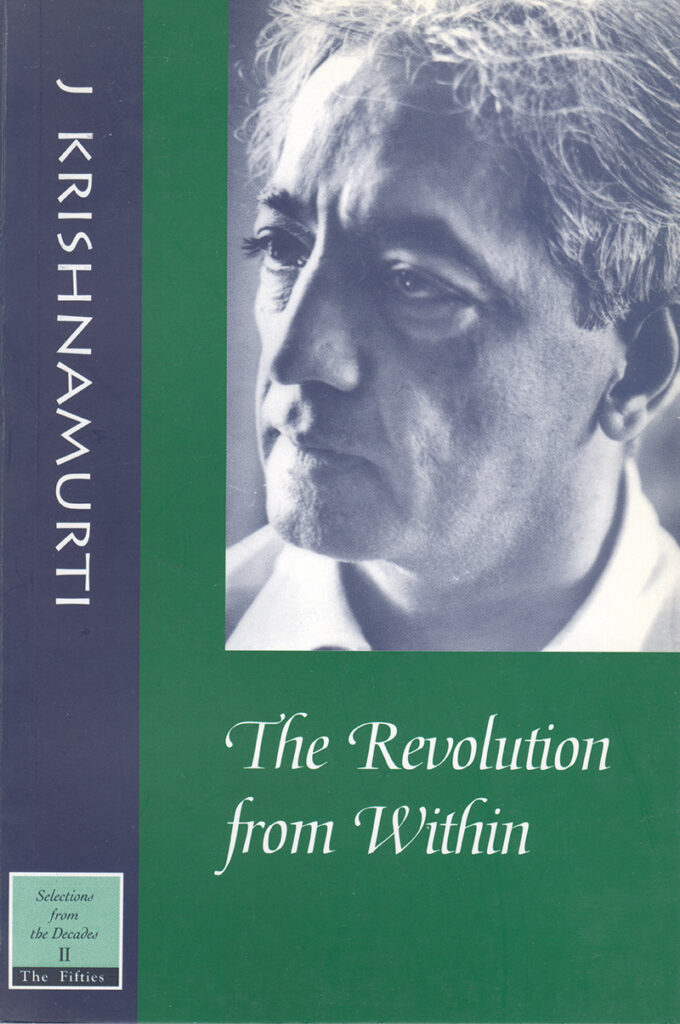
Door Jiddu Krishnamurti (1895 – 1986).
246 Pages | First edition 1999 | Softcover | Krishnamurti Foundation India, Chennai | ISBN: 8187326085.
The Revolution from Within is the second in the series titled ‘Selections from the Decades’ and consists of twenty-three public talks that Krishnamurti gave between 1952 and 1959. Whereas in the 1940s, Krishnamurti had to address a variety of contemporary social and political issues, here his focus is primarily, if not solely, on a radical change in the mind and heart of every human being. What brings about such a change is not knowledge or reason, nor new ideas or ideals, or the pursuit of some religious goals; nor does it come about through effort and will. It is only in understanding ourselves completely that this transformation takes place.
From Chapter – ’23 August’ (p. 23 & 24):
” Unless there is a transformation at the centre, not substitution, but a radical uprooting of the ‘me’, no fundamental change is possible. Realizing this, how is one to bring about a deep inner change? That is the problem, is it not? – for a serious person, not for the superficial who are seeking some comforting illusion, gurus, teachers and all the rest of the nonsense. So, how can that centre transform itself? Sirs, people who see that a change must take place, and do not know how it should come about, are easily caught by incentives, are they not? They are distracted by idealogical utopias, by the Masters, by worship, by churches, by organizations, by saviours, and so on and on and on; but when I put aside all distractions because they will not transform the centre, and I am concerned only with the transformation of the centre – when I really see the urgency, the necessity of that, then all these superficial reformations have very little significance. “
Innerlijke Leiding – De Kunst om de Innerlijke Stem te volgen
Hanneke Korteweg-Frankhuisen en Hans Korteweg.
222 Pagina’s | Uitgegeven in 1989, herziene editie 2000 | Softcover | Servire, onderdeel van Kosmos-Z&K Uitgevers, Utrecht / Antwerpen | ISBN: 9021599317.
Dit zijn boek is een handleiding voor wie in contact wil komen met zijn innerlijke stem en deze wil volgen in de dagelijkse praktijk. Het toont een weg naar het centrale zelf en het geeft aan hoe dit geraadpleegd kan worden. In Innerlijke Leiding wordt een unieke verbinding gelegd tussen een aantal schijnbaar niet verwante onderwerpen: het systeem van de chakra’s (van oer-oude Oosterse oorsprong), de vijf karakterstructuren (ontwikkeld door Wilhelm Reich en de bio-energetica) en de leer van de zeven stralen (bekend uit esoterische geschriften). De auteurs beschrijven deze systemen tot in de diepte en laten zien hoe ze met elkaar in verbinding staan. Dat maakt Innerlijke Leiding tot een waardevol boek voor zowel de beginner, die niets van materie weet, als degene die zich uitvoerig heeft verdiept in een of meer van deze stelsels.
Afkomstig uit Hoofdstuk 2 – ‘Helperschap en Instrumentschap’ (p. 30 & 31):
” Als je je levensenergie niet meer door je oude voorstellingen laat opsouperen en als je niet meer in het verleden leeft, krijg je alle ruimte om te doen wat je eigenlijk wilt doen. Dan raak je er tevens van doordrongen dat jouw ervaring, hoe uniek die ook is, tegelijkertijd voor ieder ander mens geldt. Je beseft dat ieder mens dezelfde basisverlangens heeft en op zijn weg naar vervulling moet ploegen door een zelfde tegenstand als waardoor jij moest en moet ploegen. Je begint de mensheid als een geheel te zien, en jezelf als een onmisbaar onderdeel daarvan. Minder bijzonder, maar toch onmisbaar, want wat jij kunt, kun jij alleen, zowel ten goed als ten kwade. Zo wordt je de autoriteit, die je in wezen bent en zo word je tevens lid van de familie der mensen. Dat is toetreden tot een broederschap. “
Mastering your Hidden Self – A Guide to the Huna Way
180 Pages | First edition, 1985, twelfth printing | Paperback | Theosophical Publishing House, Wheaton | ISBN: 9780835605915
The world is what you think it is
The most fundamental idea in Huna philosophy is that each of us creates our own experience of reality by our beliefs, interpretations, actions and reactions, thoughts and feelings. It is not that our reality is created as a result of these personal expressions, but that we are cocreators with the Universe itself. Huna is about learning to become a conscious Cocreator.
• Learn how your Higher Self, or aumakua, is contacted in the dream dimension
• Get in touch with the Mana, the hidden energy of life
• Develop higher powers of concentration by utilizing the tikis, created images of sight, sound, and feeling in meditation
• Become aware of your subconscious, an integral part of your being, which impatiently awaits communion with the ego
Self Realization In Kasmir Shaivism
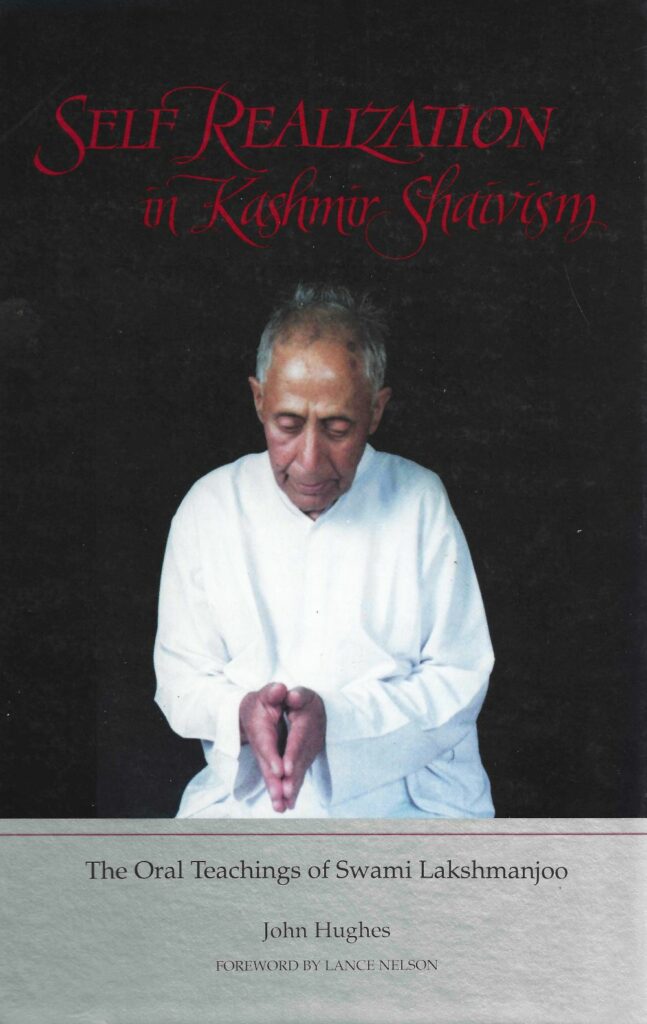
By John Hughes, Foreword by Lance Nelson.
139 Pages | Published in 1994 | Softcover | State University of New York | ISBN: 0791421805.
The Oral Teachings of Swami Lakshmanjoo.
This book presents the oral teachings of the twentieth century’s great Kashmir Shaivite master. The last of his long lineage, Swami Lakshmanjoo preserved, as did his precedessors, the oral knowledge that illuminates this ancient philosophy – that clarifies the often deliberately obscure tantric texts.
Swami Lakshmanjoo reveals the essence of the way and the means to self-realization. Here in his own original discourses, as well as in his English renderings of Abhinavagupta and Kshemarāja, he unveils the essential teachings of this yoga philosophy. He reveals the tantric understanding of the purpose and reason for creation. He offers instruction on the greatness and importance of the supreme mantra sauh. In his presentation of effective practice he explains why meditation is both effortless and, at the same time, difficult. In his discussion of discipline he clarifies why personal habits and dispositions play an important part in spiritual growth. Finally, in his unveiling of the path of Kundalini yoga, he is intent on exposing and thereby preserving this hidden elevated process while warning of its pitfalls.
From the Foreword (p. xxviii):
” Swami Lakshmanjoo traces his lineage back to the great Kashmir Śaiva polymath Abhinavagupta (tenth-eleventh centuries C.E.) and beyond. Śaivism had flourished in the Kashmir Valley for several centuries before the time of Abhinavagupta, and it continued to thrive for several hundred years after. The nondual Śaiva teaching was passed down through illustrious preceptors such as Somānanda (tenth century C.E,), his pupil Utpaladeva, and Utpaladeva’s pupil Lakshmanagupta, who – as mentioned above – was one of Abhinavagupta’s preceptors. Also worthy of mention are Kshemarāja (eleventh century), a disciple of Abhinavagupta, and Jayaratha (twelfth century), who commented on the great master’s masterpiece, the tantrāloka. “
Self Realization In Kasmir Shaivism
By John Hughes, Foreword by Lance Nelson.
139 Pages | Published in 1994 | Hardcover | State University of New York | ISBN: 0791421791.
The Oral Teachings of Swami Lakshmanjoo.
This book presents the oral teachings of the twentieth century’s great Kashmir Shaivite master. The last of his long lineage, Swami Lakshmanjoo preserved, as did his precedessors, the oral knowledge that illuminates this ancient philosophy – that clarifies the often deliberately obscure tantric texts.
Swami Lakshmanjoo reveals the essence of the way and the means to self-realization. Here in his own original discourses, as well as in his English renderings of Abhinavagupta and Kshemarāja, he unveils the essential teachings of this yoga philosophy. He reveals the tantric understanding of the purpose and reason for creation. He offers instruction on the greatness and importance of the supreme mantra sauh. In his presentation of effective practice he explains why meditation is both effortless and, at the same time, difficult. In his discussion of discipline he clarifies why personal habits and dispositions play an important part in spiritual growth. Finally, in his unveiling of the path of Kundalini yoga, he is intent on exposing and thereby preserving this hidden elevated process while warning of its pitfalls.
From the Foreword (p. xxviii):
” Swami Lakshmanjoo traces his lineage back to the great Kashmir Śaiva polymath Abhinavagupta (tenth-eleventh centuries C.E.) and beyond. Śaivism had flourished in the Kashmir Valley for several centuries before the time of Abhinavagupta, and it continued to thrive for several hundred years after. The nondual Śaiva teaching was passed down through illustrious preceptors such as Somānanda (tenth century C.E,), his pupil Utpaladeva, and Utpaladeva’s pupil Lakshmanagupta, who – as mentioned above – was one of Abhinavagupta’s preceptors. Also worthy of mention are Kshemarāja (eleventh century), a disciple of Abhinavagupta, and Jayaratha (twelfth century), who commented on the great master’s masterpiece, the tantrāloka. “
Wat is Theosofie?
By Robert Ellwood, vertaald door Marijke Koekoek.
240 Pagina’s | Eerste editie 1986, Theosophical Publishing House, Nederlandse vertaling 1994 | Soft cover | Kosmos – Z&K Uitgevers, Utrecht / Antwerpen. | ISBN: 9021522586.
De theosofische opvattingen over de schepping hebben in de loop van ruim een eeuw de aandacht en sympathie verworven van een nog steeds groeiend aantal mensen over de hele wereld. Er verschijnen steeds vaker boeken over reïncarnatie, karma, evolutie, de Eenheid van alle leven, de cyclische aard van de schepping en het mysterie van het bewustzijn. Allemaal begrippen die mede door de theosofische school zijn ontwikkeld.
Dat juist in onze tijd de belangstelling voor deze uiterst tolerante leer opnieuw krachtig groeit, heeft niet alleen alles te maken met de huidige drang van de mens naar dieper inzicht in zichzelf, maar ook met de modernste ontwikkelingen op wetenschappelijk gebied die tot inzichten leiden die vaak sterk verwant lijken met de spirituele opvattingen van de theosofen.
Uit Hoofdstuk 4 – ‘Op het Pad’ (p. 139):
Met een kenmerkende theosofische nadruk onderstreept Leadbeater het belang van dienstbaarheid. In het hoofdstuk over de Proeftijd haalt hij een Meester aan:
” Ik weet dat het enige doel in je leven het dienen van de Broederschap is; vergeet niettemin niet dat er hogere stappen voor je liggen, en dat er om vooruitgang op het Pad te boeken wakkere oplettendheid nodig is. Je moet niet alleen bereid zijn te dienen, je moet altijd uitkijken naar gelegenheden – nee gelegenheden scheppen – om in kleine dingen behulpzaam te zijn, zodat wanneer het groter werk komt, je dit niet over het hoofd zult zien. (p. 81). “
Wisdom, Bliss and Common Sense – Secrets of Self-Transformation
By Darshani Deane.
229 Pages | A Quest Original 1989 | Softcover | Quest Books, U.S.A. | ISBN: 0835606449.
Whether your tradition is Christian, Judaic, Buddhist, or something else – your life is a jourmey. Knowingly or unknowingly, we are all going Home. Being human is a process. Yet behind it lies the goal we seek. Your first questions:
- Where do you stand on the Path?
- How far have you come?
- What obstacles fight your progress?
- Do your shadows of anger, attachments, fear, ego, guilt, impatience, indecision or jealousy eclipse your inner Light?
Your second questions Do you lack know-how to still your flow of restless thoughts (without drugs), meditate, and dispel negative emotions – not by repression or expression, but by release? And your third questions: Is your meditative goal clear? Do you understand and love self, God, or the state of being you want to experience? Is your means of attainment clear? Do you meditate in the morning and then leave your meditation on your coat hanger?
These pages will bridge the chasm between your spiritual and secular life. They will help you to bring your meditation into the office, classroom, and supermarket. The author translates arcane secrets of self-transformation into kitchen language and breaks down one obstacle after another on your Path to Enlightenment.
From Part I – ‘Getting Out of Your Own Way’ (p.5):
” There is something dearer than wealth, dearer than family, dearer than life. That dearest something is your own Self, the Indweller of all beings. That all-pervading Essence is hidden in all names and forms like butter in milk and electricity in a wire. That inner Self whom the mind does not know but who knows the mind is your higher Self, Pure Consciousness. Attainment of That is called Self-Realisation. That is the goal of human birth. “
Our Glorious Future
By Mabel Collins (1851 – 1927).
115 Pages | First edition 1915, second edition 1917; this is the facsimile of 1917 | Kessinger Publishing Company, Montana | ISBN: 156459503X.
‘The Interpretation of Light on the Path’.
CONTENTS:
PART I – SELF CONQUEST.
- The Disciple
- Attend You to Them
- The Masters
- Sight
- Hearing
- Speech
- Stability.
PART II – THE TRANSMUTATION OF DESIRE.
- The Transmutation of Desire
- Work and Effort-Separateness-Sensation
- The Retreat – The Advance – The Blooming of the Flower
- Contemplation – The Study of Mankind – The Study of the Self – The Logos
- The Gifts of the Disciple – The Use of the Gifts – The Victory
- Epilogue – ‘I and my Father’.
From the Epilogue – ‘I and my Father’ (p. 115):
” ‘In my Father’s house are many mansions’, said the Master. One I have now seen myself, and it proves to me more plainly even than the experiences of the wondrous day when I saw the glorious writing (Light on the Path) on the wall, that now it is before the Christ those who are disciples must be strong enough to stand with the feet washed in the blood of the heart. I have seen Him with His feet stained with His own heart’s blood, and only so can we present ourselves before Him in His own likeness. “
The Way of Self-Knowledge
By Radha S. Burnier (1923 – 2013).
62 Pages | First edition 1971, first reprint 1980, 2nd reprint 1984, 3rd reprint 1993, 2nd edition 2000 | Softcover | Theosophical Publishing House, Adyar | ISBN: 8170594189.
The Blavatsky Lecture – delivered at the Annual Convention of the Theosophical Society in England, 26th May 1979.
‘To reach Nirvana one must reach Self-knowledge and Self-knowledge is of loving deeds the child’.
Progress in Theosophy is the journey from the unreal to the real, from darkness to light, from death to immortality. The beginning of that progress is in understanding that the infinite cannot be known by the finite. The imperishable cannot be found by involvement in the perishable and the compounded. The study of Theosophy in the true sense is the study not only of Theosophical literature; it is the study of the book of life, the observation of human nature, the contemplation of Nature and the phenomena of the created world in such a way that there is a sense of the One Existence.
From page 58:
Freedom from Attachment
” The unlimited creative power of consciousness can operate only when the limitation of attachment ends and identification is not made with objects. In freedom from attachment, there is the discovery of another of the eternal values inherent in consciousness. Since in the absence of inward freedom the other absolute values are incapable of flowering, spiritual liberation has been spoken of in the East, as the fundamental aim of human existence. “
Magical Christianity – The Power of Symbols for Spiritual Renewal (with CD)
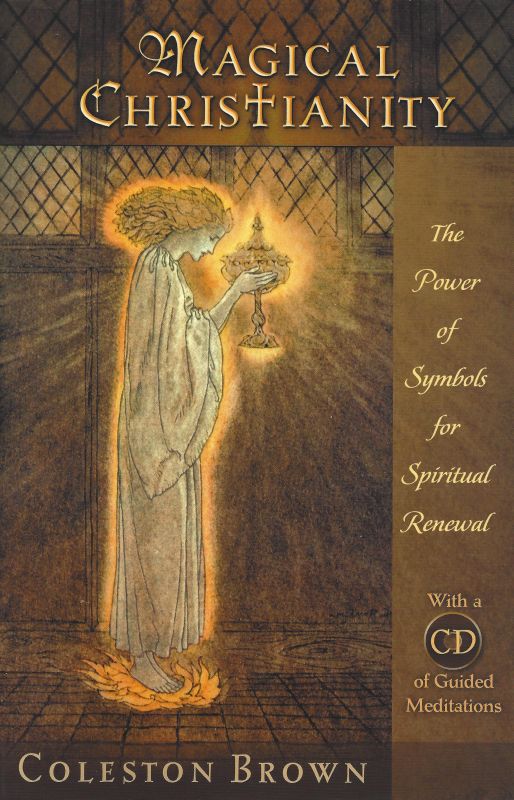
By Coleston Brown.
171 Pages | First edition, 2007 | Paperback | Theosophical Publishing House, Wheaton | ISBN: 9780835608558
Linking Magic with Christianity is less controversial than som may think, says Coleston Brown. All spiritual traditions are potentially magical in containing myths and symbols that enable the mediation of energies between levens of reality. And mediation by its very nature brings about change. To speak of ”Magical Christianity,” then, refers to the use of certain potent Christian symbols as a means to self-transformation and spiritual service.
When studying with Gareth Knight—renowned authority on Qabalistic magic—Brown became fascinated by how specific Christian symbols also appear in esoteric traditions worldwide. He later explored these images using special methods of ritual and inner vision. Here he makes that experience available to you, explaining the esoteric meaning of symbols such as:
– the cross – the center – the chalice
– the three realms – the holy fire – the wheel of life
This edition also includes new material on the Divine Feminine. On the CD, Brown narrates the experiential meditations given in each chapter to guide you more deeply into the renewing power of the imagery.
”Magic is an age-old means of using the imagination in a self-transformative way, and applying it to the symbolism of mystical Christianity has startling potential. Brown brings the two together to safe and rewarding effect. This is practical mysticism and enlightened magic in formidable combination!”
— Gareth Knight, author of Experience of the Inner Worlds
The Seven Principles of Man
By Annie Besant (1847 – 1933).
111 Pages | First Adyar Edition, 12th reprint 2015 | Hardcover | Theosophical Publishing House, Adyar | ISBN: 9788170590972.
This book is the first in a series of manuals intended to meet the need for a simple exposition of Theosophy. It describes in clear terms the seven aspects of man’s nature based on theosophical precepts. Its aim is to lead the casual enquirer to a deeper study of the philosophy, science and religion of Theosophy and ultimately to a realization of the central objective of the Society, the Brotherhood of man and the possibility of spiritual growth.
From page 2:
” Man, according to the Theosophical teachings, is a sevenfold being, or, in the usual phrase, has a septenary constitution. Putting it in another way, man’s nature has seven aspects, may be studied from seven different points of view, is composed of seven principles. The clearest and best way of all in which to think of man is to regard him as one, the Spirit or true Self; this belongs to the highest region of the universe, and is universal, the same for all: it is a ray of God, a spark from the divine fire. This is to become an individual, reflecting the divine perfection, a son that grows into the likeness of his father. “
Liberation or Salvation
By Annie Besant (1847 – 1933).
9 Pages |Reprint, 1961 | Booklet | Theosophical Publishing House, Adyar | No ISBN.
” In the early days of Christianity, ere the mass of te unlearned had crushed out the Gnostic minority; ere the loss of the teaching of Reïncarnation had attached the everlasting fate of man to his conduct during a few brief years on earth; in those early days the word SALVATION had a grandiose meaning. It meant that the man who was saved possessed the knowledge of God which is Eternal Life; it meant that he had overcome death and achieved immortality; it meant that he had become a pillar in the Temple of God, to go out in reïncarnation no more […] “
From the Outer Court to the Inner Sanctum (A Quest Miniature)

By Annie Besant (1847 – 1933)
158 Pages | 1983 | Paperback | Quest Books, Wheaton | ISBN: 9780835605748
Spirituality never ages. This little volume contains lectures held in 1895, but which are as relevant today as then, if not more so. A Temple on a Mountain top is described. It is encircled by courts, quite similar to the concentric courtyards (prakāram) of a Hindu temple. Aspirants are climbing up the ‘Mountain of Evolution’ and waiting in the enclosure outside the Temple – ‘The Outer Court’. None are in the Outer Court save those who have definitely dedicated themselves to service. Much has to be accomplished in the Outer Court, classified by the author as purification, thought control, character building, spiritual alchemy and ‘On the Threshold’. These are to be practised simultaneously, sincerely and continuously.
 Bezig met bijwerken…